
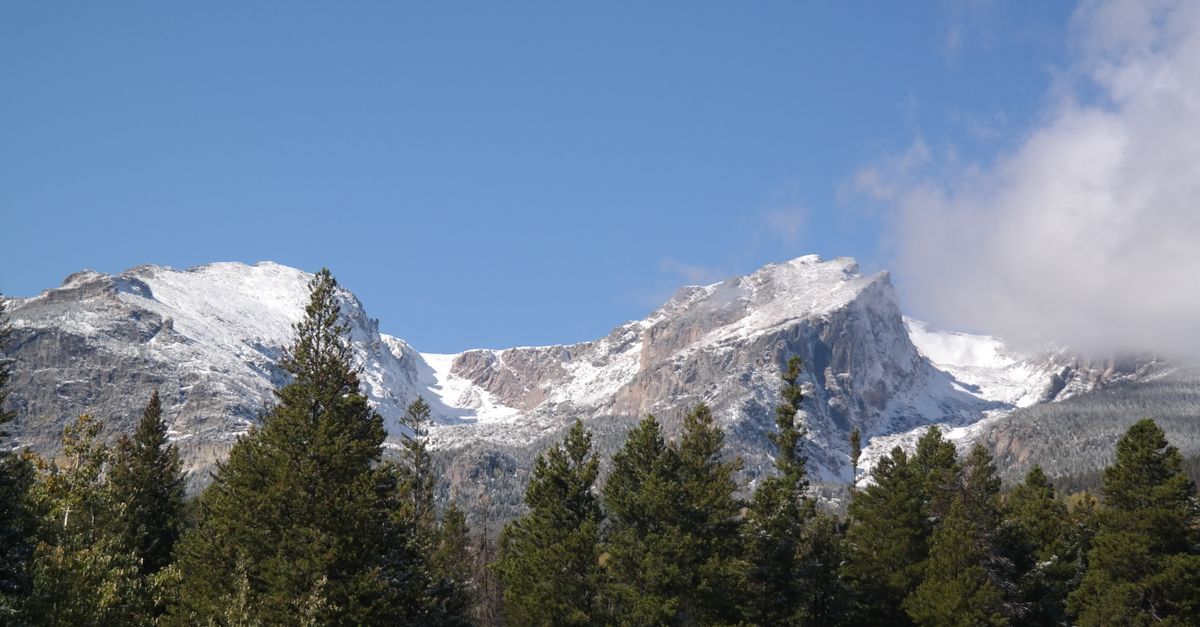
"Protected area" is a broader, more technical term than "national park." It covers any clearly defined geographical space — recognized, dedicated, and managed through legal or other effective means — to achieve the long-term conservation of nature along with associated ecosystem services and cultural values. National parks are just one category within that larger system, alongside wildlife reserves, marine protected areas, strict nature reserves, and Indigenous and community conserved areas.
Tracking this patchwork of designations globally is the job of the World Database on Protected Areas, maintained by UNEP-WCMC (the World Conservation Monitoring Centre) in partnership with the IUCN World Commission on Protected Areas. Their periodic Protected Planet Report is the standard reference for how much of the planet is actually protected.
How much of the planet is protected today
The Protected Planet Report 2024 found that about 17.6% of the world's land and inland waters, and about 8.4% of ocean and coastal areas, fall within documented protected and conserved areas. Ocean protection in particular has grown quickly in recent years as more countries designate large marine protected areas, but it still lags far behind land-based protection in overall coverage.
The 30x30 target
In December 2022, parties to the UN Convention on Biological Diversity adopted the Kunming-Montreal Global Biodiversity Framework, which includes Target 3 — commonly known as "30x30": effectively conserving and managing at least 30% of the world's land, inland waters, and ocean by 2030. Measured against the 2024 baseline, reaching that goal requires expanding protected coverage by roughly another 12 percentage points on land and roughly another 22 percentage points in the ocean within a few years — a pace far faster than recent historical growth. The next official global assessment of progress is expected in the Protected Planet Report 2027.
What counts as a protected area
| Category | Typical purpose |
|---|---|
| Strict nature reserve / wilderness area | Minimal human access; preserved for science and untouched ecological processes. |
| National park | Large-scale ecosystem protection combined with recreation, education, and tourism. |
| Natural monument | Protection of a specific natural feature, such as a geological formation or ancient grove. |
| Habitat/species management area | Active management targeted at a particular habitat or species, sometimes allowing some resource use. |
| Marine protected area | Ocean or coastal zone with regulated or prohibited fishing, extraction, and development. |
| Indigenous and community conserved area | Land or water governed and protected by Indigenous peoples or local communities under their own systems. |
Does protection actually work?
Evidence is mixed, and that nuance matters for understanding the full picture. Well-funded, well-enforced protected areas with strong community involvement can measurably slow habitat loss and support species recovery — the recovery of sea otter populations discussed in our kelp forest article is one example of targeted protection paying off. But several recent studies and reports caution that protected area coverage is expanding faster, on paper, than biodiversity loss is actually slowing down — so-called "paper parks" that exist on a map but lack funding, staff, or enforcement don't deliver the same outcomes as actively managed ones.
Protected areas and the biomes they safeguard
Different biomes face very different protection challenges. Tundra and polar regions, for instance, are relatively lightly settled and easier to protect at large scale, while temperate grasslands — covered in our grassland ecosystem article — are among the least protected biomes globally precisely because their fertile soils make them so valuable for agriculture. Coastal and marine ecosystems like coral reefs and mangroves often require protection measures, such as no-take fishing zones, that are harder to enforce than a fenced land boundary.
How to tell if a protected area is effective
- It has a clear legal designation and management authority, not just a name on a map.
- It has dedicated funding and on-the-ground staff or rangers.
- Local and Indigenous communities are involved in management, not excluded from it.
- It's monitored over time, with published data on habitat condition or species trends.
- It's large enough, or well-connected enough to other protected land, to support species that need room to roam — see our article on habitat fragmentation and wildlife corridors.
Common mistakes
- Assuming "national park" and "protected area" are the same thing. National parks are one category among several, each with different rules.
- Assuming a protected designation means permanent, guaranteed safety. Protection status can be downgraded, weakly enforced, or underfunded.
- Confusing land protection with ocean protection. The two are tracked and reported separately, and ocean protection lags well behind land protection worldwide.
Frequently asked questions
How much of the world is currently protected?
According to the Protected Planet Report 2024, about 17.6% of the world's land and inland waters and about 8.4% of ocean and coastal areas are within documented protected and conserved areas.
What is the 30x30 target?
The 30x30 target, part of the Kunming-Montreal Global Biodiversity Framework, aims to effectively conserve at least 30% of the world's land, inland waters, and ocean by 2030.
Are all protected areas national parks?
No. National parks are one category among many, which also include wildlife reserves, marine protected areas, Indigenous and community conserved areas, and strictly protected wilderness zones with different rules for human use.
Does being protected guarantee an ecosystem is safe?
Not automatically. Protection status varies widely in enforcement and funding, and several studies note that protected area coverage is still expanding faster than it is halting biodiversity loss.
Sources
- UNEP-WCMC and IUCN WCPA — Protected Planet Report 2024, accessed November 4, 2026.
- Convention on Biological Diversity — Kunming-Montreal Global Biodiversity Framework, Target 3 ("30x30"), accessed November 4, 2026.