
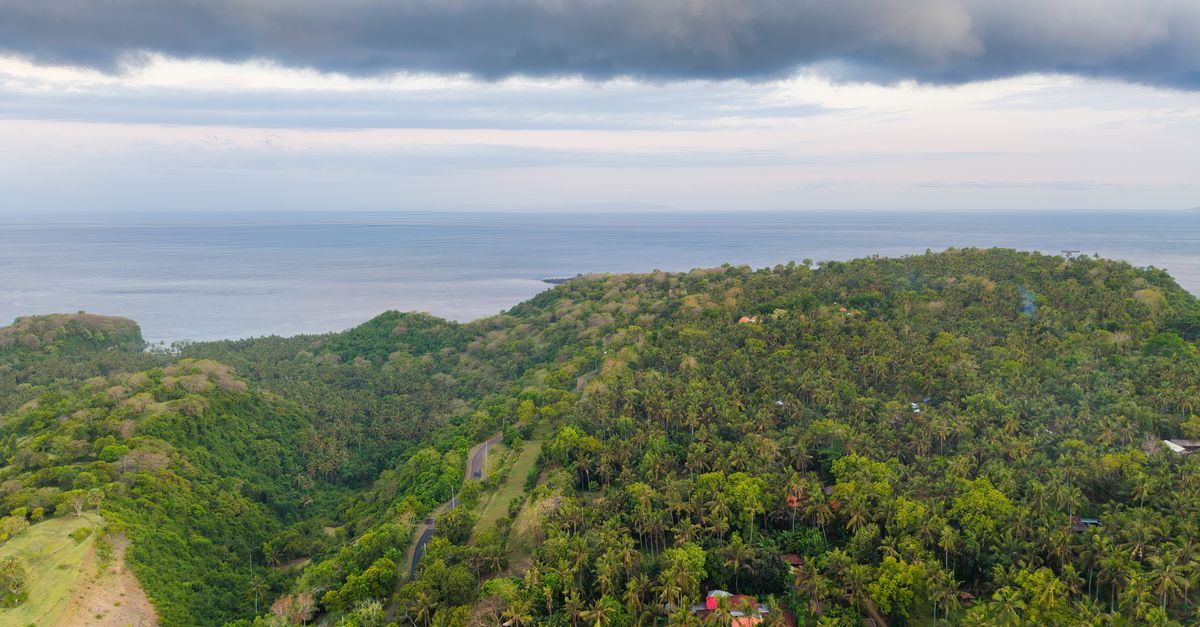
"Biodiversity hotspot" sounds like it could describe any place bursting with plant and animal life — a coral reef, a rainforest, anywhere wildlife feels abundant. In conservation science, though, it's a precise technical term. A region only qualifies as a biodiversity hotspot if it meets two strict conditions at once: extraordinary numbers of plant species found nowhere else on Earth, and the loss of most of the natural habitat that once supported them. It's a measure of irreplaceable life under serious threat, not simply a measure of how much wildlife a place has.
The concept was introduced by British ecologist Norman Myers in 1988 and later refined and mapped in detail by Conservation International. Today the designation is maintained by the Critical Ecosystem Partnership Fund (CEPF), a joint initiative of Conservation International and several other conservation funders.
The two criteria that define a hotspot
To be recognized as a biodiversity hotspot, a region must:
- Contain at least 1,500 species of vascular plants that are endemic — meaning they grow naturally nowhere else on the planet.
- Have already lost at least 70% of its original native vegetation to human activity, such as agriculture, logging, or urban development.
Both conditions matter. The first identifies places with exceptional, irreplaceable plant diversity. The second identifies places where that diversity is genuinely at risk, rather than already well-protected by remaining intact habitat. A region can be extremely rich in species and still not qualify — the Amazon Basin is a well-known example: it holds immense biodiversity, but because most of its forest cover remains standing, it isn't classified as a hotspot overall in the way a more heavily cleared region would be.
How many hotspots exist today
As of the most recent recognized update, there are 36 biodiversity hotspots worldwide. The list has grown through periodic reassessment: a major scientific review expanded the original count from 25 to 34 regions, the Forests of East Australia were added as the 35th hotspot in 2011, and the North American Coastal Plain — stretching along the Gulf and Atlantic coasts of the United States — became the 36th in February 2016, the most recent addition.
Where hotspots are found
Hotspots exist on every forested continent. Examples include the Mediterranean Basin (shared by Europe, North Africa, and the Middle East), the Cape Floristic Region of South Africa, the Western Ghats and Sri Lanka, Madagascar and the Indian Ocean Islands, the tropical Andes, and the California Floristic Province in North America — which overlaps with the Mediterranean-climate shrubland ecosystems covered in our Mediterranean shrubland article. Collectively, the 36 hotspots cover a relatively small share of Earth's land surface, which is part of why conservation organizations treat them as unusually cost-effective places to concentrate limited funding: a comparatively small amount of protected land can safeguard a disproportionate share of the planet's unique plant and animal species.
Quick example: Madagascar's lemurs
Madagascar and the Indian Ocean Islands hotspot illustrates why endemism is such a sharp criterion. Nearly all lemur species are found only on Madagascar and nowhere else on Earth, having evolved in isolation since the island separated from mainland Africa tens of millions of years ago. With most of the island's original forest already cleared for agriculture, a lemur species lost there cannot simply be reintroduced from a population elsewhere, because no wild population exists anywhere else — a concrete illustration of what "irreplaceable" means in the hotspot definition.
Why hotspots matter for conservation strategy
Conservation budgets are limited worldwide, so organizations like CEPF use the hotspot framework to prioritize where protection, restoration, and community-based conservation programs will have the greatest impact per dollar spent. A hotspot approach doesn't replace protecting large, intact ecosystems like the Amazon or the Congo Basin — it complements that work by flagging smaller, more fragmented regions where unique species have nowhere else to go if their remaining habitat disappears.
What about the ocean?
The formal 36-hotspot list maintained by CEPF is a land-based framework — it's built specifically around vascular plant endemism, which doesn't translate directly to marine ecosystems. That doesn't mean the ocean lacks comparably important places. The Coral Triangle, spanning parts of Indonesia, Malaysia, the Philippines, and several Pacific nations, is widely described by marine scientists and organizations like WWF as the global center of coral reef and reef-fish biodiversity, hosting the highest coral species richness found anywhere, even though it isn't part of the formal CEPF hotspot list. Marine conservation researchers have proposed separate hotspot frameworks for the ocean using different criteria — species richness and endemism among reef fish and corals rather than vascular plants — but no single marine list has achieved the same wide institutional adoption as the terrestrial 36. For more on what makes the biodiversity of a reef so concentrated in the first place, see our coral reef ecosystem article.
| Measure | Figure |
|---|---|
| Recognized hotspots (current) | 36 |
| Minimum endemic vascular plant species required | 1,500 |
| Minimum original vegetation lost | 70% |
| Most recently added hotspot | North American Coastal Plain (2016) |
Common mistakes
- Assuming "hotspot" just means "wildlife-rich." The term requires measurable habitat loss, not just abundant species.
- Assuming the biggest rainforests are hotspots. Large, still largely intact forests like much of the Amazon and Congo Basin don't meet the 70% habitat-loss threshold.
- Treating the hotspot count as fixed forever. The list has changed through formal scientific reassessment and could change again.
- Confusing a biodiversity hotspot with a protected area. A hotspot is a scientific classification of a region's ecological value and risk; it doesn't automatically carry legal protection — see our article on protected areas for how legal protection actually works.
Frequently asked questions
How many biodiversity hotspots are there?
Conservation International and partners recognize 36 biodiversity hotspots worldwide, a number last updated in 2016 when the North American Coastal Plain was added.
What two criteria define a biodiversity hotspot?
A region must contain at least 1,500 endemic vascular plant species found nowhere else, and it must have already lost at least 70% of its original native vegetation.
Is every biodiverse place a hotspot?
No. The Amazon Basin, for example, is extraordinarily biodiverse but is not classified as a hotspot overall because most of its original vegetation is still intact; the term specifically flags irreplaceable diversity under severe threat.
Do hotspots cover a large share of the planet?
No — the 36 hotspots together cover a small fraction of Earth's land surface, which is part of why conservation groups treat them as high-priority, cost-effective places to focus limited funding.
Sources
- Critical Ecosystem Partnership Fund (CEPF) — "What is a biodiversity hotspot?", accessed November 4, 2026.
- CEPF — Biodiversity hotspots overview and history (25 → 34 → 35 → 36 hotspots), accessed November 4, 2026.
- WWF — Coral Triangle biodiversity overview, accessed November 4, 2026.