
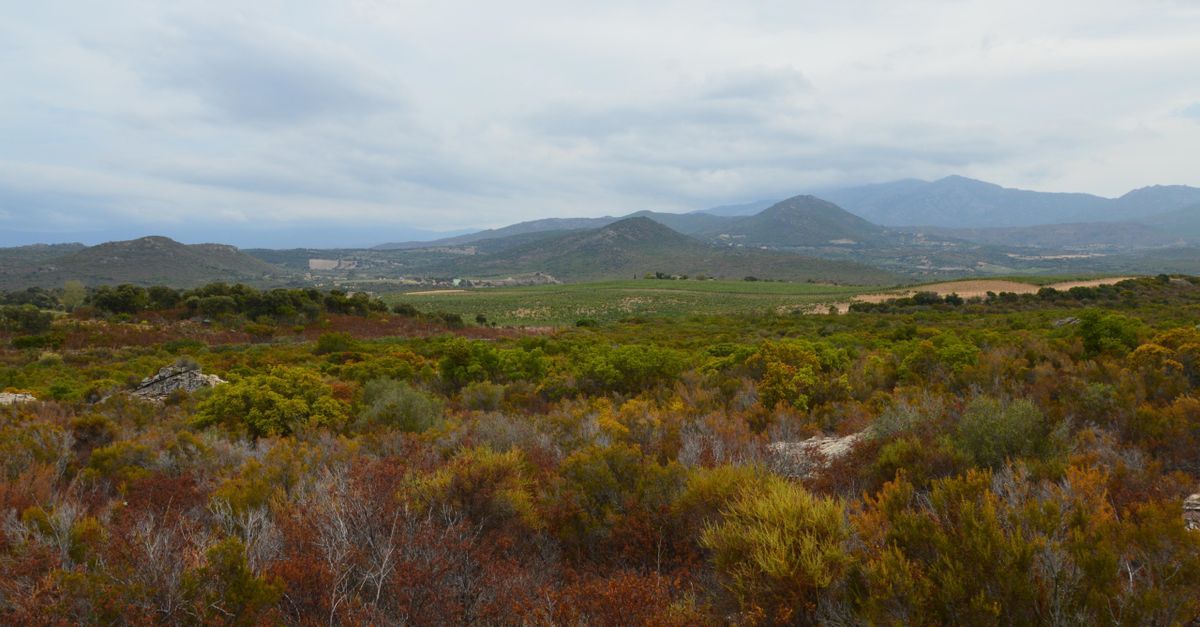
Mediterranean shrubland is a biome defined by a climate pattern that runs opposite to what most people expect: wet winters and dry summers, rather than a wet summer growing season. That reversal shapes a distinctive community of tough, drought-resistant plants — and makes this one of the most fire-adapted biomes on Earth.
Despite the name, this ecosystem occurs in five separate regions worldwide, all sharing the same climate pattern but each with its own unique plants and animals. This article explains how that climate and fire regime work, what lives there, and why these regions matter so much for global biodiversity.
Climate: the defining "Mediterranean" pattern
Mediterranean shrubland experiences mild, wet winters and hot, dry summers — the opposite seasonal rainfall pattern from a tropical savanna or monsoon climate. Summer drought, often lasting several months, is the dominant stress plants and animals must cope with here.
Soil: thin and fire-shaped
Soils are often thin, rocky, and nutrient-poor. Summer drought and periodic fire both limit how much organic matter can build up, keeping soils shallow compared to wetter, less fire-prone biomes. Ash from periodic burns does briefly enrich the topsoil with minerals, which is part of why many shrubland plants are adapted to take advantage of that short post-fire nutrient pulse before it washes away or is reabsorbed.
Five regions, one climate pattern
This biome occurs around the Mediterranean Sea in Europe, coastal California, central Chile, South Africa's Cape region, and parts of southwestern Australia. These regions are geographically separated by oceans and continents, yet convergent evolution has produced remarkably similar plant forms — small, hard, waxy (sclerophyllous) leaves — in each one, independently.
Flora, fauna, and fire adaptation
Typical flora includes evergreen sclerophyll shrubs, manzanita, rosemary and other aromatic herbs, cork oak, and fire-adapted pines. Fauna includes the Iberian lynx, mule deer, western fence lizard, a very high diversity of specialist pollinators including honeybees, and Mediterranean tortoises. Many plants show fire-triggered seed germination (serotiny) or resprout from fire-resistant root crowns, treating fire as a regular, survivable part of the ecosystem's cycle.
The shrubland food web
Drought- and fire-adapted shrubs, as producers, support browsing mammals and an unusually high diversity of insect pollinators, which in turn support reptiles, birds of prey, and small carnivores. Fire periodically resets the system, releasing nutrients quickly back into the thin soil and opening space for sun-loving seedlings that cannot establish under a mature, closed shrub canopy.
| Region | Notable feature |
|---|---|
| California, USA | More than a third of plant species found nowhere else on Earth |
| Cape Region, South Africa | Exceptionally dense concentration of plant species in a small area |
| Mediterranean Basin | Long history of human land use shaping the modern shrubland |
How to recognize Mediterranean shrubland
- Dense, low-to-medium shrubs with small, hard, waxy leaves.
- Strongly aromatic plants (rosemary, sage-like herbs) common underfoot.
- Visible fire history: blackened stems, resprouting shrubs, or fire-scarred bark.
- Wet-season greening followed by a brown, dormant dry season.
- High diversity of flowering plants and pollinating insects relative to area.
Threats and conservation
All five Mediterranean-climate regions are recognized biodiversity hotspots with very high plant endemism — more than a third of plant species in California's Mediterranean zone, for instance, are found nowhere else. The central threat is fire frequency: human-caused fires occurring more often than the natural fire-return interval can permanently convert shrubland into non-native annual grassland, especially under drought, rather than allowing the original community to regenerate.
Urban development adds a second major pressure, since Mediterranean-climate regions tend to have mild, pleasant year-round weather that also attracts dense human settlement — California, the Mediterranean Basin, and the Cape region of South Africa are all heavily populated. That combination of high biodiversity and high human population density means remaining shrubland habitat is frequently small, fragmented, and adjacent to buildings and roads, which both increases the risk of human-caused ignition and makes controlled, ecologically beneficial fire management harder to carry out safely. Invasive annual grasses, which often out-compete native shrub seedlings after a fire burns through too soon for the shrub community to recover, are a related and growing concern across all five regions.
Common mistakes
- Thinking "Mediterranean" means only the Mediterranean Sea region. The climate and biome occur in five separate regions worldwide.
- Treating all fire as catastrophic. Many shrubland species depend on periodic fire; the real danger is unnaturally frequent fire, not fire itself.
- Assuming summer greenery means healthy growth. Peak growth in this biome happens in the cooler wet season, not summer.
Frequently asked questions
Where does the Mediterranean climate occur besides the Mediterranean Sea?
This climate and biome occur in five regions: around the Mediterranean Sea, coastal California, central Chile, South Africa's Cape region, and parts of southwestern Australia.
What does sclerophyllous mean?
It describes small, hard, waxy leaves that resist water loss during the long summer drought typical of a Mediterranean climate.
Why is fire so important in Mediterranean shrubland?
Many species are fire-adapted, with fire-triggered seed germination and fire-resistant root crowns. Problems arise when fires occur far more often than the natural interval.
Why are Mediterranean shrubland regions considered biodiversity hotspots?
All five regions show very high plant endemism — for example, more than a third of plant species in California's Mediterranean zone are found nowhere else.
Can Mediterranean shrubland recover after too much fire?
Not always — overly frequent human-caused fires can permanently convert shrubland into non-native annual grassland, especially under drought.
Sources
- Huntington Botanical — Mediterranean shrublands overview. Accessed November 4, 2026. huntington.org