
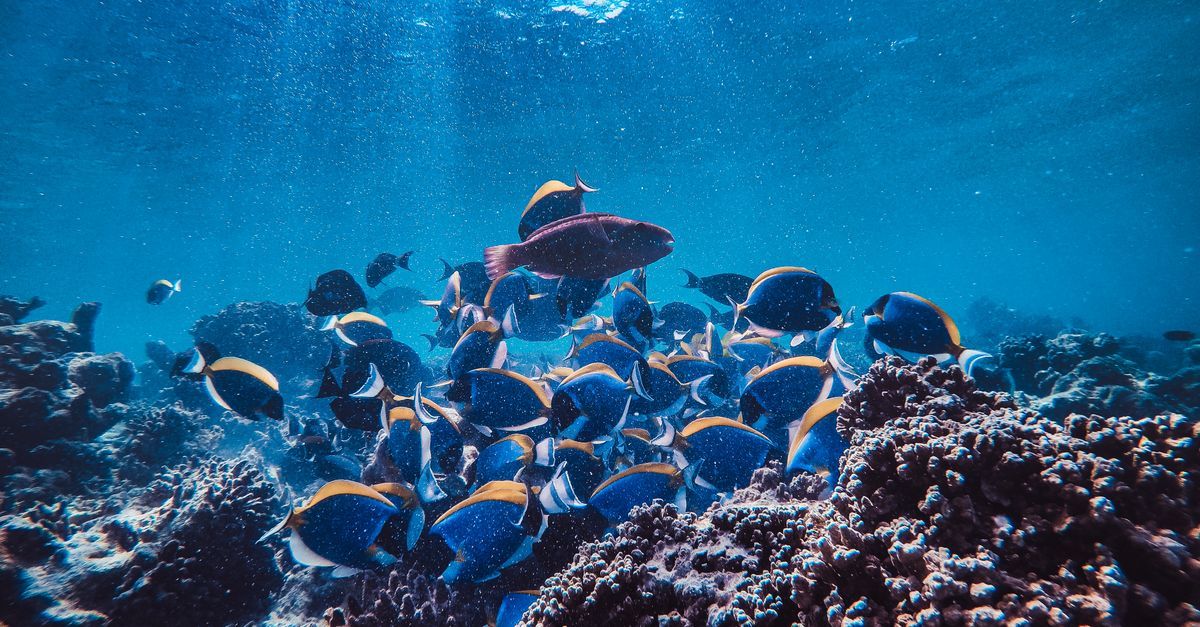
A coral reef looks like a garden of rock and color, but almost everything about that description is misleading. The "rock" is alive. The "garden" is really a city built over centuries by billions of tiny animals, each one barely larger than a grain of rice. And the result — a structure that covers less than 1% of the ocean floor yet is estimated to support around a quarter of all known marine species at some point in their lives, according to NOAA — is one of the most tightly interdependent ecosystems on Earth.
Understanding how a reef is built, and how its food web stays balanced in water that is otherwise nutrient-poor, explains both why reefs are so biodiverse and why they are so vulnerable to disruption.
What a coral reef actually is
Reef-building corals are animals, not plants. Each coral colony is made of thousands of individual polyps — small, soft-bodied organisms related to sea anemones — that secrete a shared skeleton of calcium carbonate. Over generations, that skeleton accumulates into the reef structure divers recognize, from branching staghorn formations to massive dome-shaped colonies that can be centuries old. The world's three main reef types are fringing reefs (hugging a coastline), barrier reefs (separated from shore by a lagoon, like Australia's Great Barrier Reef), and atolls (ring-shaped reefs around a sunken volcanic island).
The symbiosis that makes reefs possible
Tropical reef waters are often described as an "ocean desert" because they are low in the nutrients that normally fuel marine productivity. Reefs thrive anyway because of a partnership between coral polyps and microscopic algae called zooxanthellae, which live inside coral tissue. The algae photosynthesize and share the sugars they produce with their coral host; the coral, in turn, provides the algae shelter and compounds they need to grow. This tight nutrient recycling is what allows reefs to be so productive locally despite the surrounding water being nutrient-poor — and it's also the relationship that breaks down during coral bleaching (see our companion article on why coral bleaching happens).
Reef structure, zone by zone
| Zone | Typical depth | Conditions |
|---|---|---|
| Reef flat | 0–1 m | Shallow, warm, high light; exposed at low tide on some reefs |
| Reef crest | 1–5 m | High wave energy; sturdy, encrusting coral forms dominate |
| Fore reef slope | 5–30 m | Diverse coral growth forms; most reef biodiversity concentrates here |
| Deep reef / drop-off | 30 m+ | Lower light limits coral growth; sponges and other filter feeders increase |
Who lives on a reef: a simplified food web
Zooxanthellae and coralline algae act as the reef's producers. Herbivorous fish such as parrotfish and surgeonfish graze on algae, keeping it from smothering coral — a service so important that parrotfish are often called reef "lawnmowers." Mid-level predators like snappers and groupers feed on smaller fish and invertebrates, while reef sharks and other apex predators sit at the top, helping keep the whole system in balance. Giant clams, sea turtles (the hawksbill turtle, a reef specialist, is listed as Critically Endangered on the IUCN Red List), and countless invertebrates fill in the rest of the web.
A quick example: why parrotfish matter more than they look
- A single parrotfish can graze algae off reef surfaces daily, preventing algae from outcompeting coral for space and light.
- In the process, parrotfish bite off bits of calcium carbonate reef rock, digest the algae, and excrete the rest as fine white sand — a meaningful source of reef sand in many tropical locations.
- Removing parrotfish through overfishing allows algae to spread unchecked, which can shift a reef from coral-dominated to algae-dominated even without any direct damage to the coral itself.
Common mistakes when thinking about reefs
Common mistakes:
- Assuming coral is a plant or a rock formation rather than a colony of animals.
- Thinking a reef that looks colorful is automatically healthy — bleached coral can briefly appear white or pastel before dying, and some colorful algae overgrowth signals a reef in decline.
- Treating all reefs as identical — fringing reefs, barrier reefs, and atolls form differently and support different community structures.
- Assuming reef loss only affects marine life — coastal communities depend on reefs for fisheries and storm protection, a connection covered in our article on coastal ecosystems and human impact.
Frequently asked questions
Are corals plants, animals, or rocks?
Corals are animals. Each coral colony is made of many tiny polyps, related to sea anemones, that build a shared calcium carbonate skeleton. The living tissue hosts symbiotic algae, which is why reefs are sometimes mistaken for plants or rocks.
Why do coral reefs support so much biodiversity?
Reefs create complex three-dimensional structure in otherwise nutrient-poor tropical water, offering shelter, nursery habitat, and feeding grounds. Efficient nutrient recycling between corals and their algae lets the system support dense life despite low surrounding nutrients.
What percentage of marine species depend on coral reefs?
Reefs cover under 1% of the ocean floor but are estimated to support around a quarter of all known marine species at some point in their life cycle, according to NOAA.
How fast do coral reefs grow?
Growth varies widely by species and conditions, from a few millimeters to several centimeters per year for most reef-building corals, which is why reef structures take centuries to form and why damage can take just as long to repair.
Sources
- NOAA Coral Reef Watch — reef cover and biodiversity figures, accessed November 4, 2026. coralreefwatch.noaa.gov
- IUCN Red List — Hawksbill sea turtle (Eretmochelys imbricata) conservation status, accessed November 4, 2026. iucnredlist.org