
A keystone species is an organism whose influence on its ecosystem is far larger than its population size or total biomass would suggest. Remove it, and the ecosystem doesn't just lose one species — its entire structure can shift, often triggering a cascade of changes across many other species. The term borrows its name from architecture: a keystone is the central stone in an arch that holds all the others in place, even though it's just one stone among many.
Keystone species aren't necessarily the biggest or most numerous animals in an ecosystem. What defines them is disproportionate ecological effect — and that effect can come from predation, grazing, burrowing, pollination, or even engineering the physical habitat itself.
Sea otters and kelp forests: a classic case
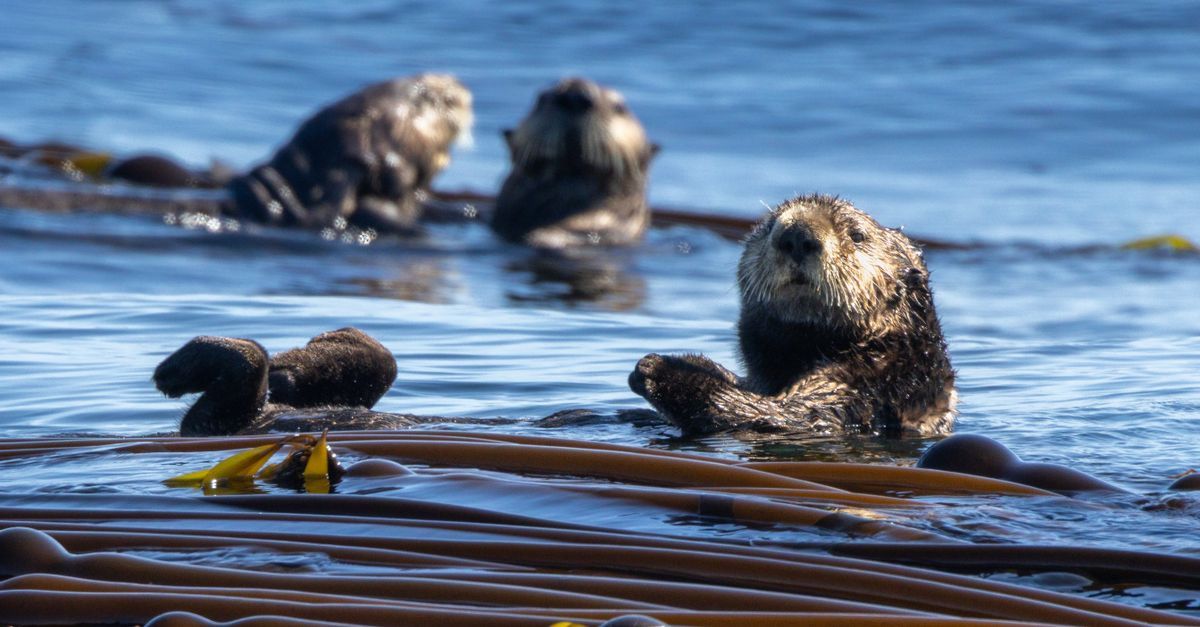
One of the best-documented keystone relationships in marine ecology involves sea otters (Enhydra lutris), listed as Endangered on the IUCN Red List. Sea otters prey heavily on sea urchins, which graze on kelp. When otter populations are healthy, they keep urchin numbers in check, allowing dense kelp forests to thrive. When otter numbers fall — through hunting, disease, or other pressures — urchin populations can explode and strip kelp forests bare, creating what ecologists call "urchin barrens." Research on recovering otter populations shows they measurably improve kelp forest resilience, which is why otters are considered a keystone predator of the kelp forest ecosystem.
Elephants as ecosystem engineers
In African savanna ecosystems, the African savanna elephant (Loxodonta africana) plays a very different kind of keystone role. Rather than controlling prey through predation, elephants physically reshape their habitat: pushing over trees, stripping bark, and trampling vegetation, which keeps savanna landscapes open and grassy rather than closing into dense woodland. This benefits grazing species like zebra and wildebeest that depend on open grassland. The IUCN lists the savanna elephant as Endangered, with populations down at least 60% over the past 50 years — a decline that concerns ecologists not only for the species itself, but for the habitat-shaping role it plays for many other savanna animals.
Other types of keystone species
| Type | How it works | Example |
|---|---|---|
| Keystone predator | Controls prey populations, preventing overgrazing or overgrowth | Sea otter and sea urchins |
| Ecosystem engineer | Physically alters the habitat for other species | Elephants; beavers (which build dams that create wetland habitat) |
| Keystone mutualist | Provides a critical service like pollination or seed dispersal | Specialist pollinators in Mediterranean shrubland |
| Keystone prey | A food source so central that many predators depend on it | Krill in polar ice and open ocean food webs |
Where the concept comes from
The term "keystone species" was coined by ecologist Robert T. Paine in 1969, based on experiments he ran on the rocky shores of Washington state starting in the 1960s. Paine removed a predatory sea star (Pisaster ochraceus) from test plots of shoreline and left nearby plots untouched as a comparison. Within about a year, the plots without the sea star lost much of their species diversity: mussels, which the sea star normally kept in check, multiplied rapidly and crowded out barnacles, algae, and other invertebrates, collapsing the plot from more than a dozen species down to just a few. The untouched plots kept their full community. That single, carefully controlled experiment became one of the founding case studies of modern food-web ecology, and it's still the reference point scientists use when identifying keystone species in new ecosystems today.
What happens when a keystone species disappears: trophic cascades
When a keystone species is lost, the resulting chain reaction through the food web is called a trophic cascade. The sea otter–urchin–kelp relationship is a textbook trophic cascade: fewer otters leads to more urchins, which leads to less kelp, which leads to less habitat for the fish and invertebrates that depend on kelp forests. Trophic cascades can also run in reverse — reintroducing or recovering a keystone predator can trigger a cascade of ecological recovery, which is why keystone species are often a top priority in conservation planning.
How to spot a possible keystone species
- Does removing it (even temporarily, due to disease or hunting) trigger visible habitat change?
- Does it physically reshape the environment (digging, building, trampling, grazing)?
- Do many other species depend on a resource it controls or creates?
- Is its own population relatively small compared to its ecological footprint?
Common mistakes
- Assuming "keystone" means "apex predator." Many keystone species, like elephants or pollinators, aren't predators at all.
- Confusing keystone species with the most abundant species. A keystone species can be relatively rare; its importance comes from its effect, not its numbers.
- Treating every important species as a keystone species. The term specifically describes a disproportionate, structure-defining effect — not just general ecological importance.
Frequently asked questions
What is a keystone species?
A keystone species is an organism whose impact on its ecosystem is disproportionately large relative to its population size — removing it causes the ecosystem's structure to change significantly, often with cascading effects on many other species.
Is a keystone species always a predator?
No. Keystone species can be predators (sea otters), large herbivores that shape habitat (elephants), or even small organisms like certain pollinators or decomposers. What defines them is their outsized ecological effect, not their size or diet.
What is a trophic cascade?
A trophic cascade is a chain reaction through a food web triggered by a change at one trophic level, often involving a keystone predator — for example, fewer sea otters leads to more sea urchins, which leads to less kelp.
How do scientists identify a keystone species?
Scientists often compare ecosystems with and without the species present, or study what happens after the species declines or is reintroduced, measuring effects on habitat structure and the abundance of other species.
Sources
- IUCN Red List — Enhydra lutris (Sea otter), accessed November 4, 2026.
- IUCN — African savanna elephant (Loxodonta africana) status, accessed November 4, 2026.
- Eco Animal Life biome dataset (kelp forest and savanna entries). See our methodology.
- Paine, R. T. (1969). "A Note on Trophic Complexity and Community Stability." The American Naturalist, 103(929) — foundational keystone species field experiment, accessed November 4, 2026.