
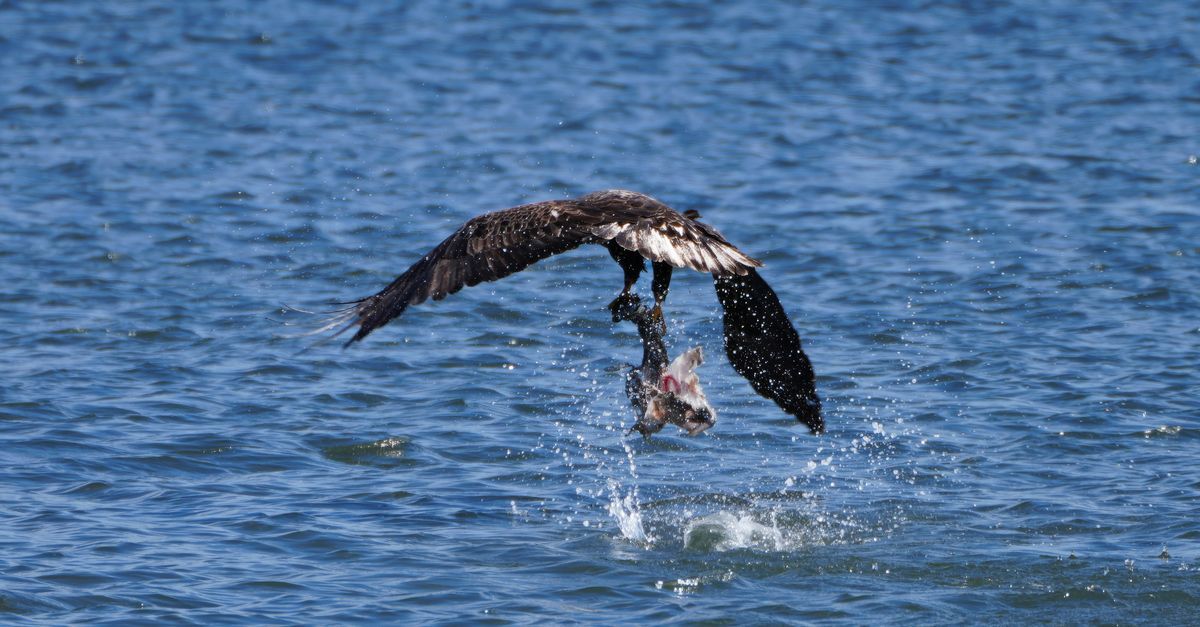
A food web is the full network of feeding relationships in an ecosystem — every link showing which organisms eat which others. Unlike a single food chain, which traces one straight path (say, grass to rabbit to fox), a food web captures the reality that most species eat more than one kind of food and are eaten by more than one predator. Every ecosystem on Earth, from a tropical rainforest to the deep sea, runs on the same three basic roles: producers, consumers, and decomposers.
Understanding food webs matters beyond biology class. Ecologists use them to predict what happens when a species disappears, when a new predator is introduced, or when climate change shifts the timing of plant growth. A change at one point in the web can ripple outward in ways that are not obvious until you can see the whole network.
The three basic roles in every food web
Every food web, regardless of ecosystem, is built from the same three functional groups:
- Producers (also called autotrophs) make their own food. On land and in shallow water, this mostly means photosynthesis — plants, algae, and some bacteria using sunlight to turn carbon dioxide and water into sugar. In the deep sea, producers instead use chemosynthesis, building food from chemicals like hydrogen sulfide near hydrothermal vents.
- Consumers (heterotrophs) get energy by eating other organisms. This group splits further into herbivores (eat producers), carnivores (eat other consumers), and omnivores (eat both).
- Decomposers — fungi, bacteria, and detritivores such as earthworms and many insects — break down dead organisms and waste, releasing nutrients back into the soil or water so producers can use them again.
How energy flows through a food web
Energy enters almost every food web as sunlight, captured by producers through photosynthesis. From there, energy moves "up" the web each time one organism is eaten by another — but a large share is lost as heat at every step (commonly estimated around 90% per transfer in simplified ecological models), which is why food webs rarely support more than four or five feeding levels and why there are always far more producers than top predators by weight. In a tropical rainforest, for example, dense canopy and understory vegetation supports a huge mass of herbivorous insects, which feed mid-level predators like birds and snakes, which in turn support relatively few apex predators such as jaguars.
A food web is not a straight line — it's a network
In a temperate forest food web, oak and maple trees (producers) are eaten by insects and browsing deer. Those insects are eaten by woodpeckers and foxes, and deer are preyed on in some regions by larger carnivores. Meanwhile, abundant fallen leaves feed an enormous community of soil decomposers — fungi, earthworms, and invertebrates — that recycle nutrients back into the soil, supporting next year's tree growth. Because deer eat more than one plant, and foxes eat more than one kind of prey, the system forms a web of connections rather than a single chain.
Food webs look different depending on the ecosystem
The shape of a food web depends heavily on how the ecosystem gets its energy. In a freshwater wetland, producers like cattails and algae support dense invertebrate life, feeding amphibians, fish, and wading birds, with decomposition happening slowly in waterlogged, low-oxygen soil — often storing carbon as peat rather than releasing it quickly. In the open ocean, by contrast, microscopic phytoplankton are the producers, supporting zooplankton, small schooling fish, and ultimately long-lived predators like tuna and whales — a long chain that concentrates energy (and, unfortunately, pollutants) at the top.
| Ecosystem | Main producers | Notable feature |
|---|---|---|
| Tropical rainforest | Canopy and understory trees, epiphytes | Extremely fast decomposition and nutrient cycling |
| Freshwater wetland | Cattails, reeds, algae | Slow decomposition; carbon stored as peat |
| Open ocean | Phytoplankton | Long chains concentrate energy at the top (tuna, whales) |
| Deep sea (hydrothermal vents) | Chemosynthetic bacteria | Food web runs entirely without sunlight |
How to trace a food web, step by step
- Identify the producers: what captures energy (sunlight or chemical) at the base?
- List the primary consumers: what eats the producers directly?
- List the secondary and tertiary consumers: what eats the primary consumers, and what eats them?
- Find the decomposers: what breaks down waste and dead matter, and how fast does that happen in this ecosystem?
- Look for a keystone species: is there one organism whose loss would reshape the whole web? (See our article on keystone species.)
Common mistakes
- Treating a food web as a straight line. Real ecosystems are networks, not chains — most animals eat more than one thing.
- Forgetting decomposers. They are not a side note; without them, nutrients would stay locked in dead material and producers would run out of resources.
- Assuming all producers use sunlight. Deep-sea vent ecosystems run on chemosynthesis, not photosynthesis.
- Confusing "top of the food web" with "most important." Removing a mid-level or keystone species can be just as disruptive as removing a top predator.
Frequently asked questions
What is the difference between a food chain and a food web?
A food chain is a single, straight-line sequence of who eats whom (grass to rabbit to fox). A food web is the full network of many overlapping food chains in a real ecosystem, since most species eat, and are eaten by, more than one other species.
What are the three main roles in a food web?
Producers (mostly plants and algae that make their own food via photosynthesis), consumers (animals that eat producers or other consumers), and decomposers (fungi and bacteria that break down dead material and recycle nutrients).
What is a trophic level?
A trophic level is a feeding position in a food web: producers are level one, herbivores (primary consumers) are level two, and predators of herbivores (secondary consumers) are level three, and so on. See our full article on trophic levels for details.
Why do food webs matter for conservation?
Removing or adding a single species can ripple through a food web and affect many others, which is why ecologists study food webs before making conservation or management decisions, such as reintroducing a predator or controlling an invasive species.
Sources
- Eco Animal Life biome dataset, compiled from IUCN, NOAA, NASA Earth Observatory, USGS, Smithsonian, UNEP, and Ramsar sources — accessed November 4, 2026. See our methodology.
- Vannote, R. L. et al., "The River Continuum Concept," Canadian Journal of Fisheries and Aquatic Sciences, as referenced via USGS river ecology publications — accessed November 4, 2026.