
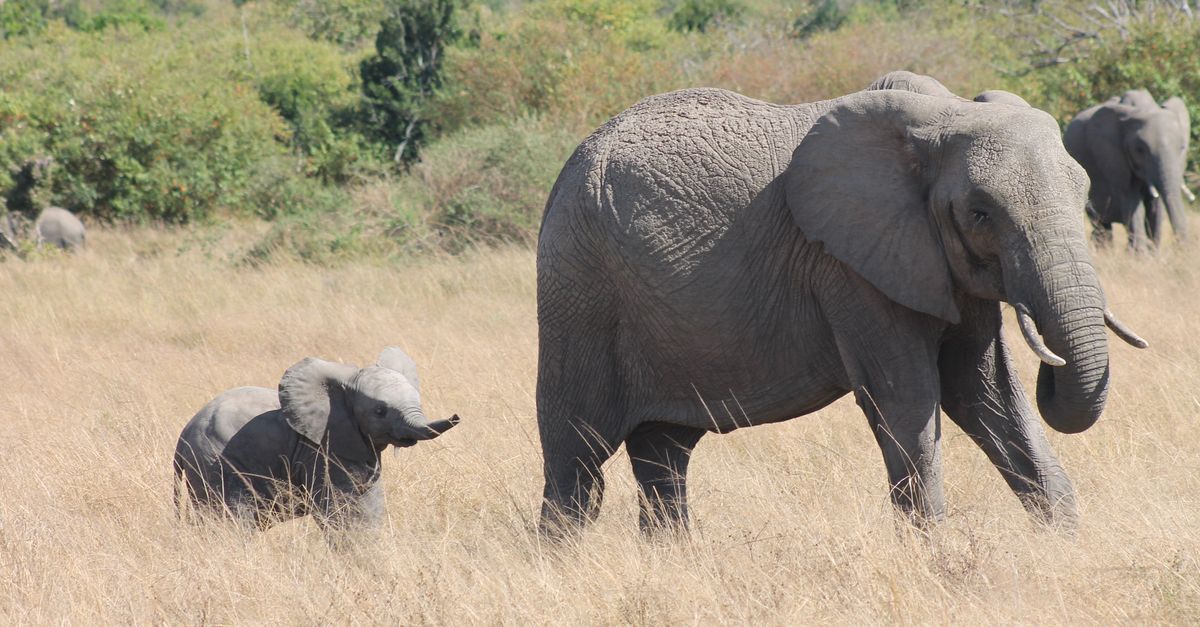
A savanna is best understood as a biome balanced on a knife's edge between forest and desert: warm enough and wet enough to support grass and scattered trees, but not wet enough, year-round, to let a closed-canopy forest take over. That balance is maintained by a sharply seasonal rainfall pattern, and it is the reason savannas support some of the largest land migrations and grazing herds on Earth.
Savannas cover large parts of Africa, South America, and Australia, and while the exact species differ by continent, the underlying climate dynamics — and many of the plant and animal adaptations that result — are strikingly similar. This article explains how savanna climate, soil, and fire interact, what lives there, and what current data says about the biome's most iconic large mammal.
Climate: a biome defined by its dry season
Savanna temperatures stay warm to hot year-round, typically in the range of 20–30°C, but rainfall is highly seasonal — usually 500 to 1,500 mm concentrated into a single wet season, followed by a long dry season that can last several months. That dry season is the defining stress on the ecosystem: it limits which plants can survive (favoring grasses and drought-tolerant trees over dense forest), and it sets the rhythm for everything from grazing migrations to fire frequency.
Soil, fire, and nutrient cycling
Savanna soils are frequently nutrient-poor and well-drained. Unlike a forest, where slow leaf-litter decomposition is the main nutrient pathway, savannas rely heavily on fire and grazing to recycle nutrients. Seasonal fires burn off dry grass quickly, returning minerals to the soil almost immediately, while grazing animals convert plant matter into dung that fertilizes the ground. Many savanna trees, such as acacia, have thick, fire-resistant bark or can resprout from root crowns after a burn — fire is a regular, expected part of this ecosystem's life cycle rather than a disaster.
Flora: grasses first, trees second
Tall perennial grasses dominate the savanna, interspersed with scattered, drought- and fire-tolerant trees such as acacia and the iconic baobab, which can store large amounts of water in its swollen trunk. Fire-tolerant shrubs fill in where trees cannot establish. The relatively open structure — grass punctuated by trees rather than continuous canopy — is what allows enough sunlight through for grass to thrive, which in turn supports the biome's large grazing animal populations.
Fauna and the savanna food web
Grasses and scattered trees, as producers, support huge herds of grazers like plains zebra and wildebeest and browsers like giraffe and elephant. Those herbivores support large predators including lion and hyena, while termites work as major decomposers, breaking down tough plant matter and driving rapid nutrient cycling back into the soil. The African savanna elephant (Loxodonta africana) is one of the biome's most studied species: the IUCN Red List classifies it as Endangered, noting populations have fallen by at least 60% over the past 50 years, even as some individual protected populations stabilize or grow (accessed November 4, 2026).
| Attribute | Savanna | Tropical Rainforest |
|---|---|---|
| Rainfall pattern | Strongly seasonal, one wet season | High, year-round, little seasonality |
| Canopy structure | Open; scattered trees among grass | Closed, multi-layered canopy |
| Main nutrient driver | Fire and grazing | Fast decomposition of litter |
How to recognize a savanna
- Continuous grass cover with trees present but not forming a closed canopy.
- Clear wet-season/dry-season rainfall pattern rather than year-round rain.
- Evidence of recent fire (blackened grass bases, resprouting shrubs) is common and natural.
- Large grazing herds and their predators, rather than canopy-dwelling primates.
- Termite mounds, sometimes several meters tall, dotting the landscape.
Threats and conservation
Savanna ecosystems face pressure from conversion to agriculture and livestock grazing, poaching, and habitat fragmentation that blocks traditional migration routes. The African savanna elephant's long-term population decline — down at least 60% over 50 years per the IUCN — illustrates how even a highly visible, well-studied species can face sustained pressure despite conservation efforts in specific protected areas.
Common mistakes
- Calling any grassland a "savanna." True savanna is warm year-round with scattered trees; cold-winter treeless grasslands are a different biome (see our grassland article).
- Treating fire as purely destructive. In savannas, periodic fire is a normal ecological process that recycles nutrients and maintains the open grass-tree structure.
- Assuming all savannas have the "Big Five." Lions, elephants, and zebras are specific to African savanna; South American and Australian savannas have entirely different wildlife.
Frequently asked questions
What makes a savanna different from a grassland?
Savannas are warm year-round with a distinct wet and dry season, and typically have scattered trees among the grasses. Temperate grasslands have cold winters and are usually treeless.
Why do savannas burn so often?
Seasonal drought dries out tall grasses, creating abundant fuel. Fire recycles nutrients back into nutrient-poor soils faster than decomposition alone, and many savanna plants are fire-adapted.
Is the African savanna elephant endangered?
Yes. The IUCN Red List classifies it as Endangered, noting populations have fallen by at least 60% over the past 50 years, even as some protected populations stabilize or grow.
Do all savannas have the same wildlife?
No. African savannas are famous for large grazing herds and lions, but savanna also occurs in South America and Australia with very different, regionally specific species.
What is the role of termites in a savanna ecosystem?
Termites are major decomposers, breaking down dead plant material in nutrient-poor soils. Their mounds also improve soil aeration and water infiltration.
Sources
- IUCN — African savanna elephant (Loxodonta africana) status. Accessed November 4, 2026. iucn.org
- UC Museum of Paleontology, Berkeley — The Grassland and Savanna Biomes. Accessed November 4, 2026. ucmp.berkeley.edu