
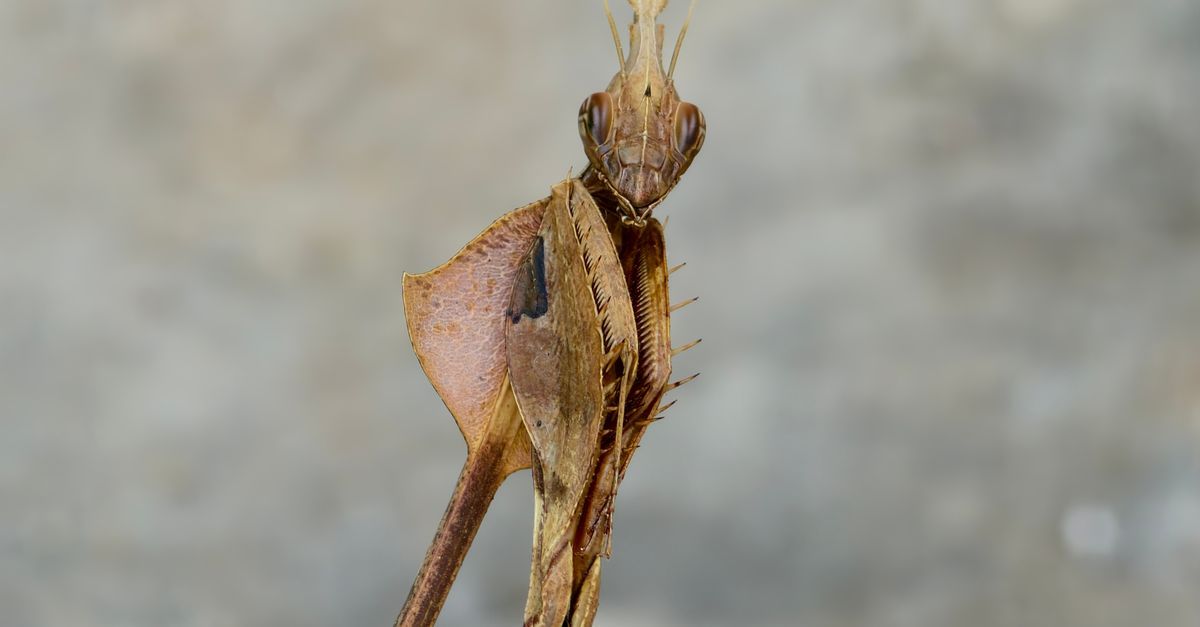
Camouflage and mimicry are two of the most visually striking adaptations in nature, but they work in opposite ways. Camouflage helps an organism disappear into its surroundings. Mimicry works by resembling something else entirely — often to be noticed, not hidden — tricking a predator or prey into a specific, exploitable response. Both strategies appear across nearly every ecosystem on Earth, from the Arctic tundra to coral reefs.
Camouflage: blending in
The simplest form of camouflage is background matching — coloring or patterning that resembles the immediate environment. In the tundra and taiga, the Arctic fox and snowshoe hare molt into a white winter coat that blends with snow, then shift to brown or gray in summer, allowing the same basic strategy to work year-round as the landscape itself changes color.
Countershading: camouflage in open water
In the open ocean, where there's no vegetation or terrain to blend into, many fast-swimming predators and prey — including sharks and tuna — use countershading: a darker back and a paler belly. Seen from above (by a predator looking down into dark water), the dark back blends with the depths; seen from below (by a predator looking up toward bright surface light), the pale belly blends with the sky-lit water surface. The same pattern shows up independently in very distant species, a sign of how effective it is.
Warning coloration: the opposite of hiding
Not every animal wants to be invisible. Poison dart frogs in tropical rainforests are brightly colored — reds, yellows, electric blues — specifically to stand out. This is aposematism, or warning coloration: the bright pattern advertises that the animal is toxic, and predators that survive an encounter learn to avoid that color pattern in the future. Warning coloration only works because the signal is honest (or convincingly faked — see mimicry, below) and consistent within a species and often across related species in the same habitat.
Mimicry: borrowing someone else's reputation
Mimicry takes advantage of a predator's learned avoidance of a dangerous or unpleasant species. In Batesian mimicry, a harmless species evolves to resemble a toxic or dangerous one, gaining protection without needing to produce the toxin itself — certain harmless snakes and insects closely resemble venomous or chemically defended species found in the same region. In Müllerian mimicry, two or more actually toxic species evolve to resemble each other, which reinforces the warning signal predators learn and spreads the "cost" of predator education across multiple species rather than one.
Reef camouflage and disguise
Coral reef ecosystems showcase some of the most elaborate camouflage in nature. Many reef fish use disruptive coloration — bold patterns that break up their outline against the complex visual background of coral — rather than simply matching a single background color. Some reef species go further with active camouflage, changing color and texture to match whatever surface they're resting on.
Active camouflage: changing color on demand
Most camouflage is fixed — an animal's coloring is set by its genes and, at most, changes slowly with the seasons. A smaller group of species can camouflage actively, in real time. Octopuses and cuttlefish have skin packed with pigment-filled cells called chromatophores, surrounded by muscles that expand or contract them in fractions of a second, letting the animal shift color, pattern, and even apparent texture to match a new surface almost instantly. Some reef fish and certain amphibians achieve a slower version of the same trick over minutes or hours rather than seconds. Active camouflage is metabolically expensive compared to a fixed coat or shell pattern, which is one reason it tends to appear in animals — like octopuses, which have no hard shell to hide in — that are especially vulnerable without it.
A related but distinct trick is mimicry of movement rather than appearance alone: the so-called mimic octopus of Indo-Pacific reefs can flatten its body and alter its swimming pattern to imitate the shape and motion of more dangerous animals, such as a flatfish or sea snake, rather than just matching a static background color.
Comparing camouflage and mimicry strategies
| Strategy | Goal | Example |
|---|---|---|
| Background matching | Blend into surroundings | Arctic fox's seasonal white coat |
| Countershading | Blend when viewed from above or below | Sharks, tuna |
| Disruptive coloration | Break up body outline | Many reef fish |
| Aposematism | Advertise toxicity (not hiding) | Poison dart frogs |
| Batesian mimicry | Resemble a dangerous species without being dangerous | Harmless mimics of venomous species |
| Müllerian mimicry | Reinforce a shared warning signal between toxic species | Co-mimicking toxic species in the same habitat |
How to tell camouflage from mimicry in the field
- Ask: is the animal trying to disappear, or trying to look like something specific?
- Camouflage usually matches a background (color, texture, pattern of the habitat).
- Mimicry usually resembles another living thing or specific warning pattern, not just the backdrop.
- Bright, bold, high-contrast coloring is a clue for aposematism or mimicry, not camouflage.
- Check if a "model" species with real toxicity or danger exists nearby — a sign of possible Batesian mimicry.
Common mistakes
- Assuming all bright colors are poor camouflage. In many cases bright color is a deliberate warning signal (aposematism), not a failure to hide.
- Confusing mimicry with camouflage. Mimicry resembles another organism or specific signal; camouflage blends with the general background.
- Assuming camouflage is only visual. Some species also use scent or sound-based disguise, though this article focuses on visual strategies.
Frequently asked questions
What is the difference between camouflage and mimicry?
Camouflage helps an organism blend into its surroundings to avoid being noticed. Mimicry involves resembling a different organism or object, often to be noticed and misidentified, such as a harmless species resembling a toxic one.
What is countershading?
Countershading is a camouflage pattern, common in open-ocean animals, with a darker back and a paler belly. Seen from above, the dark back blends with deep water; seen from below, the pale belly blends with bright surface light.
Why are poison dart frogs brightly colored instead of camouflaged?
Poison dart frogs use aposematism, or warning coloration — their bright colors advertise toxicity to predators, which learn to avoid them, the opposite strategy from camouflage.
What is Batesian mimicry?
Batesian mimicry is when a harmless species evolves to resemble a dangerous or unpalatable species, gaining protection from predators that have learned to avoid the model species, without the mimic needing to be toxic itself.
Sources
- Eco Animal Life biome dataset (tropical-rainforest, tundra, and open-ocean entries). See our methodology.
- NOAA Coral Reef Watch — reef fish and habitat overview, accessed November 4, 2026.