
Surviving extreme heat and drought is a battle against water loss. Hot desert and savanna animals have evolved a range of strategies — behavioral, physiological, and anatomical — to stay cool and conserve the water they already have, since drinking water may be scarce or completely unavailable for long stretches.
These adaptations show up across very different body plans, from small reptiles to large migratory mammals, but they all solve the same two linked problems: don't overheat, and don't run out of water.
Avoiding the heat: nocturnal and crepuscular behavior
One of the simplest and most widespread strategies is timing. In hot deserts, many animals — including the fennec fox and sidewinder rattlesnake — are nocturnal or crepuscular, active mainly at night or around dawn and dusk when temperatures are far lower than at midday. This single behavioral shift dramatically cuts the amount of water an animal needs to lose through panting or sweating just to stay at a safe body temperature.
Getting water without drinking
Many desert specialists rarely or never need to drink standing water. Instead, they extract most of their moisture from food, including "metabolic water" generated internally when the body breaks down fat. Darkling beetles in hot deserts collect condensation on their bodies in the early morning, and many desert rodents survive almost entirely on the water content of seeds. Camels, meanwhile, can go for extended periods without drinking by tolerating large shifts in body water content and temperature that would be dangerous for most mammals.
Body shape, size, and color
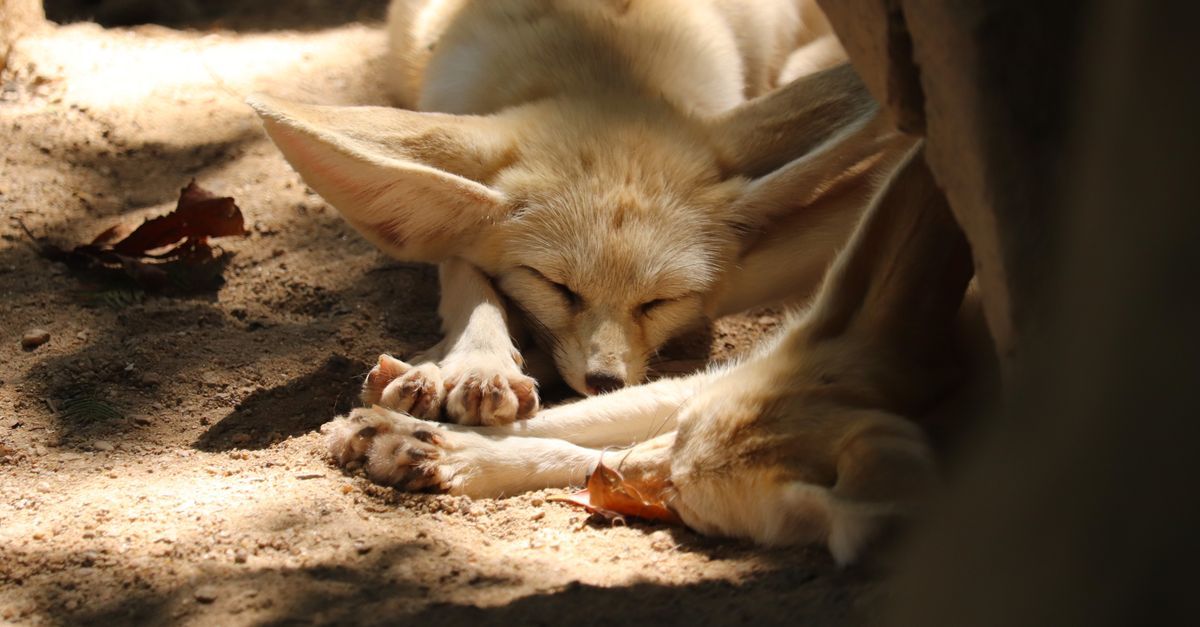
Physical traits matter too. The fennec fox's oversized ears aren't just for hearing — their large surface area helps radiate excess body heat away, a strategy known as Allen's rule in ecology (cold-climate animals tend to have smaller extremities; hot-climate animals, larger ones). Lighter coloration in many desert species reflects more sunlight than darker fur or scales would, reducing heat absorption during unavoidable daytime activity.
Conserving water internally
Beyond behavior and body shape, many heat-and-drought specialists have internal plumbing built for water conservation. Kangaroo rats and several other desert rodents produce extremely concentrated urine, so little water is lost in waste — some species can survive their entire lives without drinking free-standing water at all, relying only on the moisture in dry seeds. Camels take a different internal route: rather than sweating steadily, they let their body temperature drift several degrees higher during the day before releasing the stored heat at night, which cuts down how much water they need to spend on evaporative cooling. Their nasal passages also recapture moisture from exhaled air before it escapes, a feature shared by several other desert mammals.
Reptiles solve the same problem differently again. The Mojave desert tortoise can store water in its bladder for months, drawing on that internal reserve during the driest parts of the year, and spends much of the hottest season sheltering in burrows rather than relying on its body chemistry alone. Across these very different solutions — concentrated urine, heat storage, water-recapturing noses, internal reservoirs — the underlying goal is identical: lose as little water as possible while staying within a survivable temperature range.
Savanna herbivores: migration instead of hiding
In the savanna biome, seasonal drought is predictable but still severe, and many large grazers respond with movement rather than physiological extremes. Wildebeest and plains zebra undertake long-distance migrations to follow seasonal rainfall and fresh grass, timing breeding and movement around water and forage availability rather than enduring drought in place. This large-scale behavioral adaptation is why savanna migrations are among the most dramatic wildlife movements on Earth.
Heat and drought adaptations compared
| Strategy | How it works | Example species |
|---|---|---|
| Nocturnal/crepuscular activity | Avoids peak daytime heat, reducing water loss | Fennec fox, sidewinder rattlesnake |
| Metabolic water production | Generates water internally from digested food/fat | Desert rodents, camels |
| Heat-radiating anatomy | Large ears or thin limbs increase surface area for heat loss | Fennec fox |
| Seasonal migration | Moves to follow rainfall and fresh grazing rather than enduring drought | Wildebeest, plains zebra |
| Burrowing/shelter-seeking | Escapes surface heat in cooler underground microclimates | Mojave desert tortoise |
How to recognize a heat-and-drought adaptation
- Larger-than-expected ears or limbs relative to body size (heat radiators).
- Lighter body coloration compared to related species in cooler climates.
- Burrowing behavior or use of shaded microhabitats during the day.
- Ability to tolerate large internal shifts in body temperature or water content.
- Seasonal, long-distance movement tied to rainfall patterns.
Common mistakes
- Assuming desert animals never drink. Many will drink when water is available — the adaptations simply let them survive when it isn't.
- Confusing drought-escape (migration) with drought-tolerance (physiology). Both are valid strategies, but they work in very different ways.
- Overlooking plants. Animal adaptations to heat and drought often depend on plant adaptations too — see our companion article on plant adaptations.
Frequently asked questions
How do desert animals get water without drinking?
Many desert animals get most of their water from the food they eat, including metabolic water produced internally when fat is broken down, which means some species can go long periods without ever drinking directly.
Why are many desert animals active at night?
Nocturnal or crepuscular (dawn/dusk) activity lets animals avoid the hottest daytime temperatures, reducing water loss through panting or sweating and lowering the risk of overheating.
Do desert animals have special ears or body shapes?
Yes. Large ears, like those of the fennec fox, increase surface area to release excess body heat, while compact, lighter-colored bodies in many species help reflect sunlight and reduce heat absorption.
How do large migratory herbivores like wildebeest cope with seasonal drought?
Rather than relying on individual physiology alone, species like wildebeest and zebra migrate long distances to follow seasonal rainfall and fresh grazing, timing reproduction and movement around the availability of water.
Sources
- IUCN Red List — Gopherus agassizii (Mojave desert tortoise), accessed November 4, 2026.
- IUCN — African savanna elephant and savanna ecosystem overview, accessed November 4, 2026.
- Eco Animal Life biome dataset (hot-desert and savanna entries). See our methodology.