
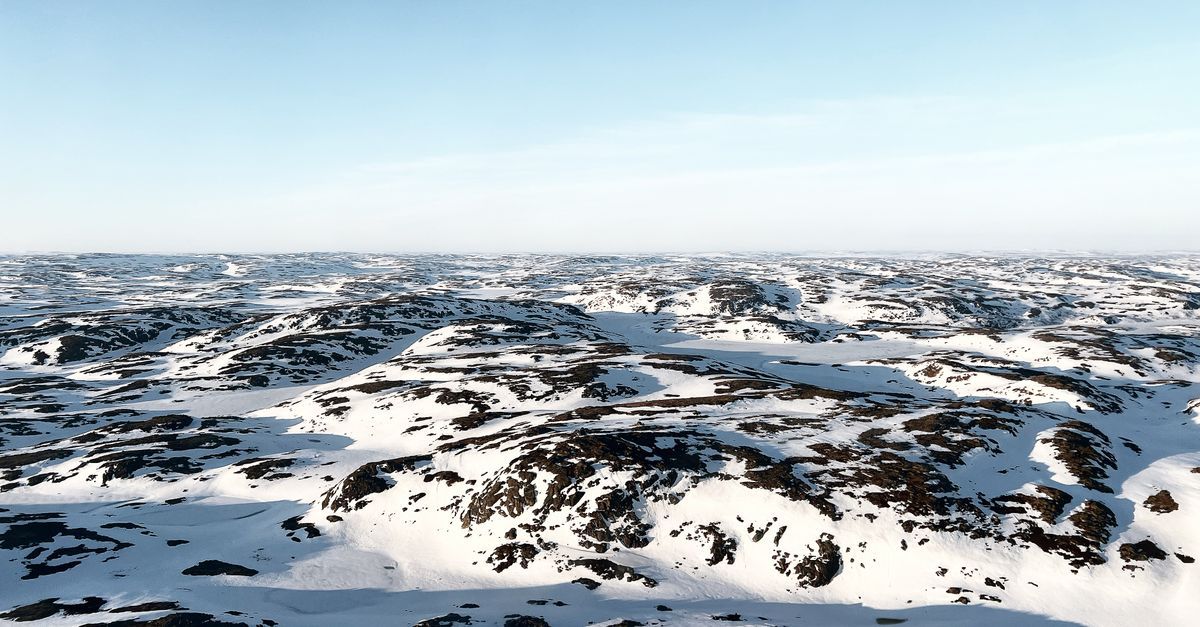
Tundra is life stripped down to the essentials: a biome where the ground itself is frozen for most of the year, the growing season lasts only a few weeks, and nearly every plant and animal has built its entire survival strategy around that single, overwhelming constraint.
Found across the northern reaches of North America, Europe, and Asia, tundra sits at the cold edge of what terrestrial life can tolerate. This article explains what permafrost is and why it matters, what lives above and within it, and what current data says about a thawing Arctic.
Climate: cold, dry, and short on daylight hours in winter
Tundra climate is defined by very cold temperatures, long winters, and short, cool summers. Precipitation is low — tundra is sometimes called a "cold desert" for this reason — and permafrost, permanently frozen subsoil, underlies the ground across most of the biome. Winter here also brings extended periods of darkness at high latitudes, which further limits plant growth even in years when temperatures briefly rise above freezing.
What permafrost actually is
Permafrost is ground that remains frozen year-round, typically for at least two consecutive years, sometimes for thousands. Only a shallow surface layer — the active layer — thaws briefly each summer, creating waterlogged, nutrient-poor soil conditions and severely limiting how deep plant roots can grow. This frozen base is the single most important physical feature shaping tundra ecology.
A growing season measured in weeks
Tundra productivity is low, constrained by a growing season of roughly two to three months and cold soils that limit both root growth and decomposition. Plants respond by growing low to the ground, often in cushion or mat form, to avoid wind and cold while making the most of the brief period when temperatures allow growth.
Flora and fauna of the frozen ground
Characteristic plants include dwarf willow and birch, mosses, lichens such as reindeer lichen, cotton grass, and cushion-forming wildflowers. Wildlife includes the Arctic fox, caribou (reindeer), snowy owl, and lemmings, plus the polar bear (Ursus maritimus), which is listed as Vulnerable on the IUCN Red List, with sea-ice loss identified as its primary threat (accessed November 4, 2026).
The tundra food web
Low-growing plants, mosses, and lichens, as producers, support grazers such as caribou and lemmings, which in turn support predators like Arctic fox and snowy owl. Decomposition is very slow in cold, waterlogged soils, so organic matter accumulates as peat rather than being quickly recycled, locking large amounts of carbon into the ground over time.
| Attribute | Tundra | Taiga |
|---|---|---|
| Tree cover | None (treeless) | Dense coniferous forest |
| Ground condition | Permafrost beneath a thin active layer | Seasonally unfrozen soil |
| Growing season | About 2-3 months | Longer, still short relative to temperate biomes |
How to recognize tundra
- Treeless landscape with low, ground-hugging vegetation.
- Visible wetness or standing water in summer, from meltwater sitting above frozen ground.
- Lichens and mosses covering large areas of exposed rock and soil.
- Wildlife with thick fur or feathers and, in some species, seasonal white camouflage.
- A very short, intense burst of flowering plants during the brief summer.
Threats and conservation
Warming is thawing permafrost and shifting vegetation patterns across the tundra. A WWF-cited estimate notes that roughly one million square kilometers of western Siberian permafrost has been turning into shallow lakes as the ground melts (accessed November 4, 2026), a process that also threatens den sites used by species such as the polar bear and destabilizes the broader landscape.
Permafrost thaw also has effects that reach well beyond the tundra itself. Frozen ground has locked away organic carbon for thousands of years; as it thaws, microbes can finally break that material down, releasing carbon dioxide and methane back into the atmosphere. At the same time, shrubs are expanding into areas that were previously too cold for anything but low tundra vegetation, a shift researchers call "shrubification," which can change how much sunlight the ground absorbs and further speed local warming. For wildlife, a less stable, more unpredictable landscape — collapsing ground, shifting water bodies, earlier spring thaw — adds pressure on top of direct habitat loss from a shrinking area of reliable permafrost.
Common mistakes
- Assuming tundra is simply "frozen desert." Tundra is seasonally wet and biologically active in summer, not uniformly barren.
- Confusing tundra with taiga. Tundra is treeless; taiga, just to the south, is forested. See our taiga article.
- Thinking permafrost thaw only affects plants. Thawing ground destabilizes terrain, releases stored carbon, and disrupts wildlife habitat, including den sites.
Frequently asked questions
What is permafrost?
Permafrost is ground that stays frozen year-round, typically for at least two consecutive years. Only a shallow active layer thaws briefly each summer.
How long is the tundra growing season?
Typically only about two to three months, constrained by cold soils and short periods of warmth.
Is the polar bear endangered?
The polar bear is listed as Vulnerable on the IUCN Red List, with sea-ice loss identified as its primary threat.
Why is thawing permafrost a problem?
Thawing ground can collapse or turn into shallow lakes, destabilizing the landscape, releasing stored carbon, and threatening den sites used by tundra species.
What plants grow in the tundra?
Typical flora includes dwarf willow and birch, mosses, reindeer lichen, cotton grass, and cushion-forming wildflowers.
Sources
- IUCN Red List — Ursus maritimus (Polar bear). Accessed November 4, 2026. iucnredlist.org
- WWF Arctic Programme. Accessed November 4, 2026. wwf.panda.org