
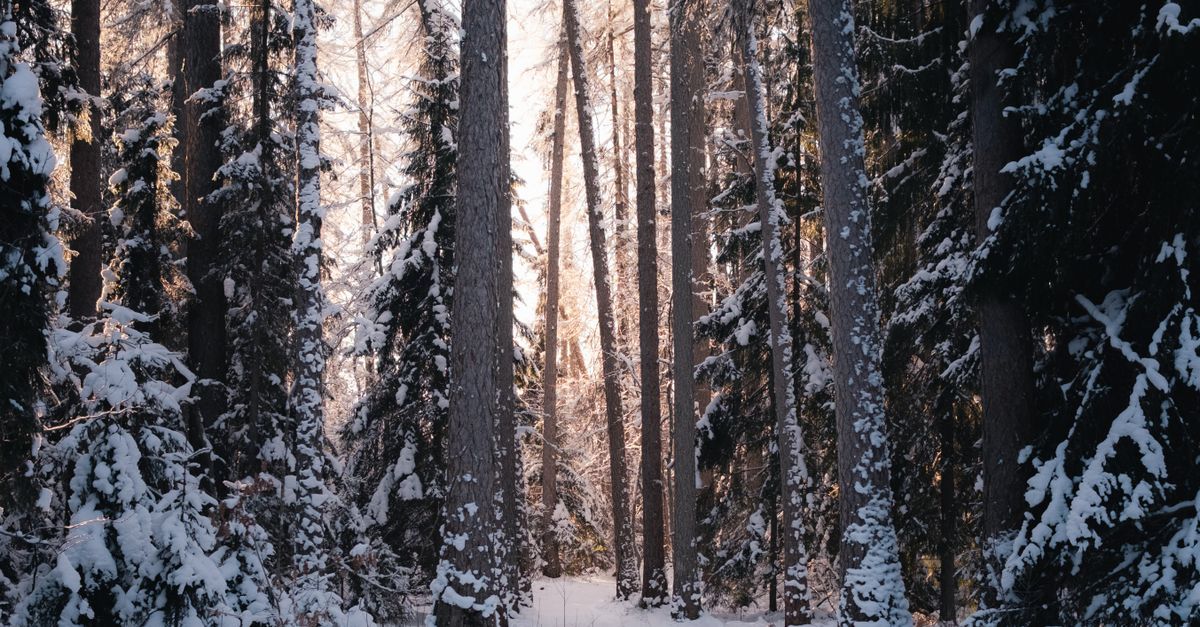
If you combined the land area of the United States and roughly one and a half more countries its size, you would get close to the footprint of the taiga — the coniferous forest belt that circles the globe just south of the Arctic tundra. It is, by most measures, the single largest terrestrial biome on the planet.
Stretching across Canada, Alaska, Scandinavia, and much of Russia, the taiga (also called boreal forest) is shaped above all by long, severe winters and a short summer growing season. This article covers how that climate shapes the biome's soil, plants, animals, and the wildfire risk increasingly reshaping it.
Climate: long winters, brief summers
The taiga experiences long, severe winters and short, mild summers, with modest annual precipitation, much of it falling as snow. Unlike temperate forest further south, there is no extended mild season — growth is compressed into a brief summer window, and everything about the ecosystem's structure reflects that constraint.
Soil: thin, acidic, slow to decompose
Taiga soils are typically thin, acidic, and nutrient-poor (often classified as podzols), decomposing very slowly in the cold. Needle litter from conifers breaks down far more gradually than broadleaf litter in a temperate forest, which contributes to the acidity and limits the soil's fertility compared to biomes further south.
How big is the taiga?
The taiga is widely cited as the largest terrestrial biome on Earth, with estimates ranging from roughly 16.6 to 17 million km² (accessed November 4, 2026). That scale means the taiga plays an outsized role in global carbon storage and climate regulation — and that disturbances here, like large wildfires, have effects that reach well beyond the biome's own borders.
Flora and fauna adapted to the cold
Spruce, fir, pine, and larch dominate the canopy, with mosses and lichens covering much of the forest floor. Characteristic animals include moose, Canada lynx, snowshoe hare, wolverine, and great gray owl — all adapted to deep snow, limited winter food, and a short burst of summer productivity.
The lynx-hare cycle: a famous food web pattern
Coniferous trees and ground mosses or lichens, as producers, support browsers like moose and snowshoe hare, which are hunted by lynx and wolverine. The relationship between Canada lynx and snowshoe hare is one of the most extensively studied predator-prey population cycles in ecology: hare numbers rise and fall roughly every 8 to 11 years, and lynx populations track that cycle closely, typically lagging a year or two behind as their main food source becomes more or less abundant.
| Attribute | Taiga | Temperate Forest |
|---|---|---|
| Dominant trees | Coniferous (spruce, fir, pine) | Deciduous broadleaf (oak, maple) |
| Winter strategy | Evergreen, waxy needles | Leaf drop / dormancy |
| Growing season | Short, intense summer burst | Longer, more gradual |
How to recognize a taiga ecosystem
- Dense stands of needle-leafed conifers with a conical shape that sheds snow.
- A forest floor covered largely in mosses and lichens rather than leafy understory plants.
- Thin, acidic soil visible where exposed.
- Wildlife with seasonal coat-color change (snowshoe hare, ermine) for camouflage.
- Long, cold winters and a short, intense summer growth period.
Threats and conservation
Logging, resource extraction, and increasingly severe wildfires linked to a warming climate are the taiga's main threats. Because the biome historically relied on periodic fire as a natural part of its cycle, the shift toward more frequent and intense burns — rather than fire itself — is the central concern for taiga conservation today.
The scale of the taiga means these pressures have consequences well beyond the forest itself. Boreal soils and peat store enormous amounts of carbon built up over thousands of years of slow decomposition, and large, severe wildfires can release a meaningful share of that stored carbon back into the atmosphere in a single fire season. Logging roads and resource extraction infrastructure also fragment what was historically a largely continuous forest belt, which can disrupt the long migrations and wide home ranges that species like moose and wolverine depend on, even where the surrounding forest looks otherwise intact on a map.
Common mistakes
- Confusing taiga with tundra. Taiga is forested; tundra, further north, is treeless. See our tundra article for the distinction.
- Assuming low diversity means low importance. The taiga has fewer species than tropical biomes but plays an outsized role in global carbon storage due to its sheer size.
- Treating all taiga fire as harmful. Periodic fire is a natural part of this biome's cycle; the real concern is fires becoming more frequent and severe than historical norms.
Frequently asked questions
How big is the taiga, really?
The taiga is the largest terrestrial biome on Earth, with estimates ranging from about 16.6 to 17 million square kilometers, stretching across Canada, Alaska, Scandinavia, and much of Russia.
Why do taiga trees stay green all winter?
Most taiga trees are coniferous evergreens with waxy, needle-shaped leaves that resist winter water loss and can photosynthesize whenever conditions allow.
What is the lynx-hare cycle?
Snowshoe hare populations rise and fall in roughly 8-11 year cycles, and Canada lynx populations track those swings closely, since lynx depend heavily on hares as prey.
Is the taiga threatened by wildfire?
Yes — increasingly severe wildfires linked to a warming climate, along with logging and resource extraction, are among the taiga's main threats.
What animals live in the taiga?
Characteristic animals include moose, Canada lynx, snowshoe hare, wolverine, and great gray owl.
Sources
- Guinness World Records — Largest terrestrial biome. Accessed November 4, 2026. guinnessworldrecords.com