
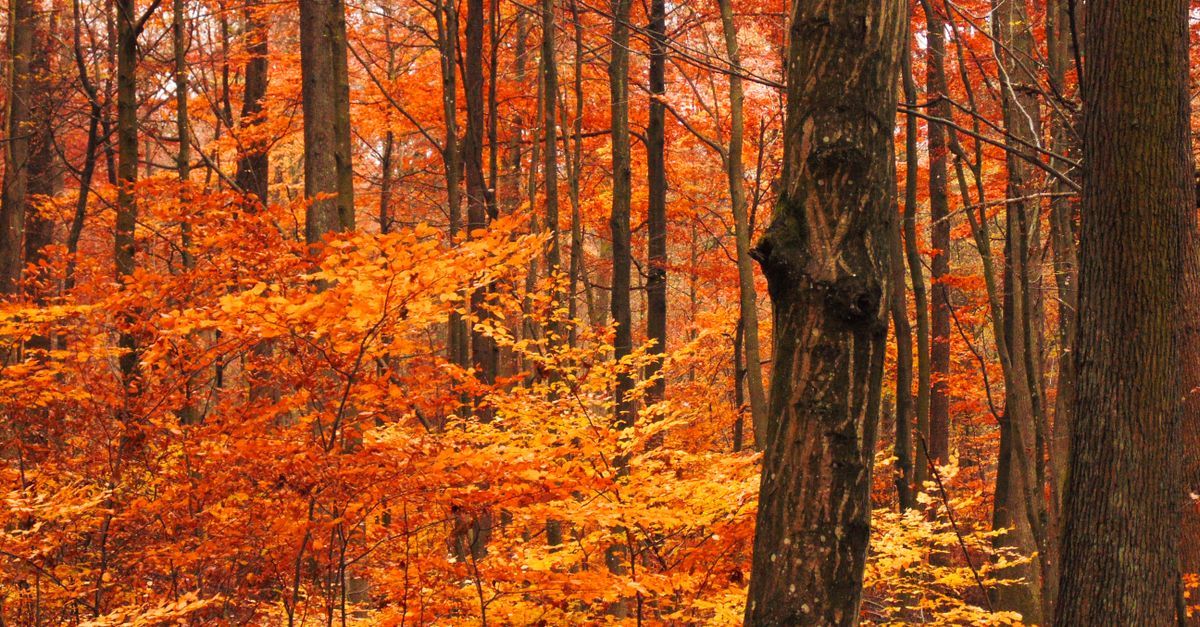
Temperate forests are the biome of four distinct seasons — the only major forest type where most trees are built to go fully dormant every year. That rhythm of leaf-out, growth, color change, and leaf drop shapes nearly everything about how the ecosystem works, from soil fertility to which animals can survive there year-round.
Found across much of North America, Europe, and parts of Asia, temperate forests sit in a climate sweet spot: not as consistently warm and wet as a tropical rainforest, but far milder than the boreal taiga further north. This article covers the climate, soil, wildlife, and conservation status of the temperate forest biome.
Climate: four seasons, moderate rainfall
Temperate forests experience warm, humid summers and cold winters, with moderate rainfall spread fairly evenly across the year rather than concentrated in one season. That seasonality — rather than total rainfall — is the defining climate feature, and it is why deciduous trees, which can shut down for winter, dominate rather than evergreens.
Soil: fertile ground built by decades of leaf litter
Unlike the nutrient-poor soils of a tropical rainforest, temperate forest soils are typically fertile and organic-rich, built up over decades as fallen leaves decompose more slowly in cooler temperatures. That slower decomposition rate means organic matter accumulates in the soil instead of being almost immediately reabsorbed by plants, which is also why temperate forest land, once cleared, often makes productive farmland — a major reason so much of this biome has historically been converted to agriculture.
Productivity and the seasonal growing cycle
Reference estimates put temperate forest gross primary productivity at roughly 16–50 metric tons per hectare per year — generally lower overall than tropical rainforest once the dormant winter season is factored in, although net productivity in young, fast- growing stands can approach tropical levels during the active growing months.
Flora and fauna through the year
Characteristic trees include oak, maple, beech, and birch, with ferns and wildflowers filling the understory, especially in spring before the canopy fully leafs out and blocks sunlight. Resident animals include white-tailed deer, black bear, red fox, woodpeckers, and salamanders — a community adapted to a landscape that looks and functions very differently in each season.
The temperate forest food web
Canopy and understory trees and shrubs, as producers, support leaf-eating insects and browsing mammals like deer, which in turn feed predators such as fox and bobcat. Abundant leaf litter fuels a rich decomposer community of fungi, earthworms, and soil invertebrates — the same slow decomposition that builds fertile soil over time.
| Strategy | Example species | How it works |
|---|---|---|
| Hibernation / torpor | Black bear, some rodents | Metabolism slows dramatically to conserve stored fat |
| Migration | Many songbirds | Leave entirely for warmer regions during winter |
| Staying active | White-tailed deer, red fox | Rely on fat reserves, thicker coats, and varied winter food sources |
How to recognize a temperate forest
- Broadleaf trees that visibly change color and drop leaves seasonally.
- A thick layer of leaf litter and dark, organic-rich topsoil.
- A noticeable difference in canopy density and understory light between seasons.
- Moderate species diversity — far higher than tundra, lower than tropical rainforest.
- Signs of seed caching (buried acorns, etc.) by squirrels and jays.
Threats and conservation
Historic clearing for agriculture and settlement already removed most old-growth temperate forest across Europe and much of North America. Today, the leading pressures are fragmentation, invasive pests such as the emerald ash borer, and climate-driven shifts in the timing and length of the growing season, which can disrupt the seasonal cues that temperate forest species depend on.
Fragmentation matters because many temperate forest species need a continuous block of habitat to find food, mates, and shelter through all four seasons. A forest broken into small, isolated patches by roads or farmland can look green on a map while supporting far fewer species than an equivalent area of unbroken woodland, because wide-ranging animals like black bear and many songbirds simply cannot use small, disconnected fragments the same way. Shifting growing seasons add a second layer of stress: when spring warmth arrives earlier than it used to, trees, insects, and migratory birds do not always shift their timing by the same amount, which can leave young animals hatching after their preferred food source has already peaked.
Common mistakes
- Assuming all forests are evergreen. Temperate forest is defined by its deciduous, seasonally dormant trees — very different from taiga's conifers.
- Thinking fall color is decline, not strategy. Leaf color change is a deliberate, energy-recovering process before leaf drop, not simple decay.
- Overlooking soil fertility as a conservation issue. The same fertile soil that makes temperate forest valuable ecologically is also why it's so often converted to farmland.
Frequently asked questions
Why do temperate forest trees lose their leaves?
Deciduous trees drop leaves to conserve water and energy during cold winters, when frozen ground limits water uptake and low light limits photosynthesis anyway.
Why is temperate forest soil more fertile than rainforest soil?
Cooler temperatures slow decomposition just enough that organic matter builds up in the soil over years, rather than being reabsorbed almost instantly as in tropical rainforest.
What is the biggest threat to temperate forests today?
Fragmentation, invasive pests such as the emerald ash borer, and climate-driven shifts in growing season, on top of historic clearing for agriculture and settlement.
Do animals hibernate in all temperate forests?
Not all — hibernation is common, but migration and simply remaining active with fat reserves are also common winter strategies.
How is a temperate forest different from a taiga?
Temperate forests are dominated by broadleaf deciduous trees with milder winters, while taiga is dominated by conifers adapted to longer, more severe winters further north.
Sources
- Encyclopaedia Britannica — Temperate forest, biological productivity. Accessed November 4, 2026. britannica.com