
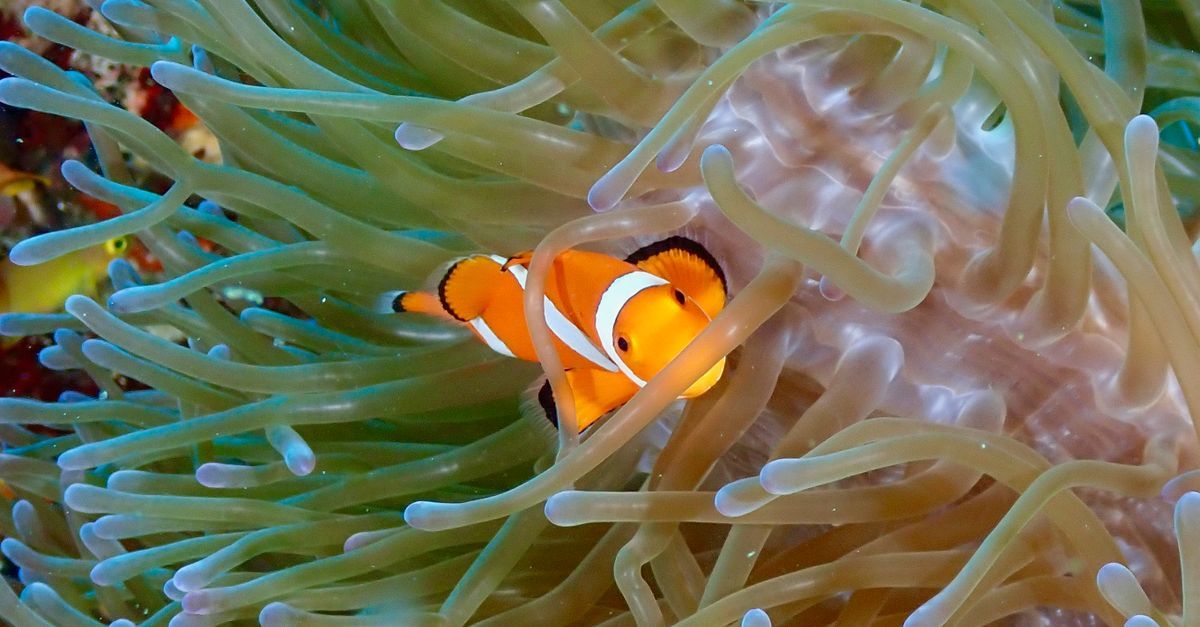
Symbiosis describes any close, long-term biological relationship between two different species. The term covers a wide range of outcomes — from partnerships that benefit both species to relationships where one species clearly benefits at the other's cost. Ecologists classify these relationships into three broad types: mutualism, commensalism, and parasitism, based on whether each species gains, loses, or is unaffected.
Mutualism: both species benefit
In mutualism, both partners gain something from the relationship. One of the clearest examples in any ecosystem is the relationship between coral polyps and zooxanthellae, the symbiotic algae that live inside coral tissue. The coral provides the algae with a protected, sunlit home; in return, the algae photosynthesize and share food energy with the coral, fueling the high productivity that makes coral reefs possible even in nutrient-poor tropical waters. This relationship is so central to reef ecosystems that its breakdown — coral bleaching, when heat stress causes corals to expel their algae — is one of the most serious threats reefs face today; NOAA Coral Reef Watch reported that bleaching-level heat stress affected roughly 84% of the world's coral reef area between January 2023 and April 2025, the most extensive global bleaching event on record.
Another mutualism: mangroves and juvenile fish
Mangrove forests offer a different kind of mutualistic-adjacent relationship, functioning as nursery habitat. Juvenile reef fish shelter among mangrove roots, gaining protection from open- water predators, while the broader coastal food web benefits as mangrove leaf litter breaks down into detritus that feeds crabs, shrimp, and filter feeders — a relationship that links mangrove, estuarine, and reef ecosystems together.
Commensalism: one benefits, the other is unaffected
In commensalism, one species benefits while the other experiences no significant effect. In lake and river ecosystems, some smaller fish and invertebrates shelter among the structures created by larger species without helping or harming them. Epiphytic plants in tropical rainforests, such as orchids and bromeliads growing on tree branches, offer a classic terrestrial example: the epiphyte gains elevated access to sunlight, while the host tree is generally unaffected, since the epiphyte draws moisture and nutrients from the air and rain rather than from the tree itself.
Parasitism: one benefits at the other's expense
In parasitism, one species benefits directly at the cost of the other, which is harmed but usually not immediately killed (unlike predation). Parasites are found in essentially every ecosystem — from internal parasites affecting large grassland grazers to external parasites on fish in rivers and lakes. Unlike predators, parasites typically depend on their host surviving, at least for a while, which shapes how aggressively they exploit it.
Chemosynthesis and symbiosis at hydrothermal vents
One of the most extreme examples of mutualism occurs far from sunlight, at deep-sea hydrothermal vents. Giant tube worms have no digestive system at all — they rely entirely on internal chemosynthetic bacteria, which convert chemicals like hydrogen sulfide into usable energy inside the worm's body. The worm provides the bacteria a stable, chemical-rich home; the bacteria provide the worm's only source of food. This relationship allows an entire food web to exist without any sunlight at all.
Comparing the three types of symbiosis
| Type | Species A | Species B | Example |
|---|---|---|---|
| Mutualism | Benefits | Benefits | Coral polyps and zooxanthellae |
| Commensalism | Benefits | Unaffected | Epiphytic orchids on rainforest trees |
| Parasitism | Benefits | Harmed | Internal parasites in grassland grazers |
How to classify a symbiotic relationship
- Does species A benefit? If no, it's not symbiosis in the usual sense — consider predation or competition instead.
- Does species B also benefit? If yes, it's mutualism.
- Is species B unaffected? If yes, it's commensalism.
- Is species B measurably harmed, while the relationship persists over time (not a quick kill)? If yes, it's parasitism.
- Check whether the relationship could shift under stress — some mutualisms become costlier to one partner under environmental pressure.
Common mistakes
- Confusing parasitism with predation. Predators typically kill prey quickly; parasites usually depend on the host surviving, at least for some time.
- Assuming commensalism never has any effect at all. True neutrality is hard to prove; many relationships labeled "commensal" may have very small effects that simply haven't been measured.
- Treating symbiosis as always positive. The term is neutral — it just means a close relationship between species, not necessarily a beneficial one.
Frequently asked questions
What are the three types of symbiosis?
The three main types are mutualism (both species benefit), commensalism (one benefits, the other is unaffected), and parasitism (one benefits at the other's expense).
Is the coral-algae relationship mutualism?
Yes. Coral polyps provide a protected home for symbiotic algae (zooxanthellae), and the algae provide the coral with food through photosynthesis — both partners benefit, making it a classic example of mutualism.
What is coral bleaching, in symbiosis terms?
Coral bleaching happens when heat or other stress causes coral polyps to expel their symbiotic algae, breaking the mutualistic relationship; without the algae, corals lose their main food source and color, and can die if the algae don't return in time.
Can a symbiotic relationship change between types over time?
Yes. Some relationships can shift along a spectrum depending on conditions — for example, a relationship that is typically mutualistic can become more costly to one partner under environmental stress, blurring the line between mutualism and parasitism.
Sources
- NOAA Coral Reef Watch — Global coral bleaching event data, accessed November 4, 2026.
- NOAA Ocean Exploration — hydrothermal vents and chemosynthesis, accessed November 4, 2026.
- Eco Animal Life biome dataset (coral-reef, mangrove, and deep-sea entries). See our methodology.