
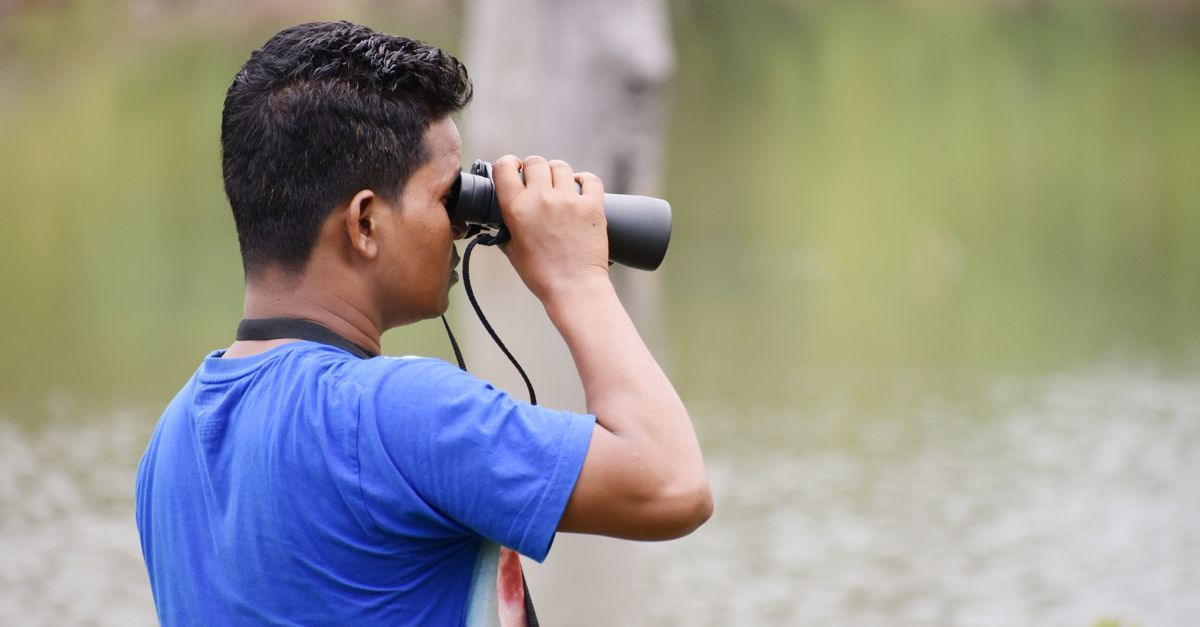
Most ecosystem monitoring used to depend entirely on trained researchers physically visiting a site. That's still essential work, but it's slow and expensive to scale across an entire continent. Citizen science changes the math: ordinary observers, using simple smartphone apps, can log what they see in their own backyard, local park, or hiking trail, and that data flows into shared databases researchers actually use.
The scale citizen science has reached
The growth has been substantial. A study published in the journal BioScience in July 2025 reported that iNaturalist's database had grown past 200 million observations, contributed by more than 3 million users worldwide — identifying plants, animals, fungi, and other organisms from photos, often with the help of AI-assisted suggestions that a human identifier then confirms. eBird, a platform focused specifically on birds and run by the Cornell Lab of Ornithology, has separately become one of the largest biodiversity datasets in existence, with hundreds of thousands of contributing birders and species occurrence records that have passed well over a billion submissions.
How researchers actually use this data
| Use case | How citizen data helps |
|---|---|
| Range mapping | Thousands of geotagged sightings reveal a species' actual current range far faster than scheduled field surveys alone. |
| Early invasive species detection | A public sighting is often the first record of a new invasive species in an area — see our invasive species article. |
| Phenology tracking | Repeated observations of flowering, fruiting, or migration timing across many years and locations reveal climate-linked shifts (see our climate change and shifting biomes article). |
| Population trend estimates | Long-running, large-scale datasets like eBird's help estimate population trends for species too widespread to survey comprehensively by field crews alone. |
Known limitations
Citizen science data isn't perfectly representative, and researchers account for this when using it. Studies of eBird data, for example, have found that observation density is noticeably higher in higher-income and predominantly white neighborhoods — a pattern tied to where observers live and have easy access to green space, not to where wildlife actually is. That means raw observation counts can reflect human access and interest as much as true species abundance, so researchers typically need to adjust for observation effort before drawing conservation conclusions from the data.
Structured monitoring programs, not just casual sightings
Not all citizen science is a one-off photo upload. Some of the longest-running ecological datasets in existence come from structured volunteer programs with a fixed protocol, repeated on the same schedule every year. The Audubon Christmas Bird Count, running every December since 1900, is one of the oldest continuously operating citizen science programs anywhere, and its century-plus of standardized counts is still used by researchers to study long-term shifts in bird distribution. More recent structured programs apply the same idea underwater: Reef Check trains volunteer divers to survey coral reef health using a fixed survey method, producing a long-running, globally comparable record of reef condition that complements the kind of reef monitoring described in our coral bleaching article. Programs like NestWatch (nest success tracking) and FrogWatch (amphibian call surveys) work the same way: a fixed, repeatable protocol turns a hobby observation into a data point a researcher can actually compare across years and locations.
The common thread across all of these — whether it's a single iNaturalist photo or a decades-long structured survey — is standardization. A clear protocol (what to record, how often, and how precisely) is usually what separates a dataset researchers can use from one they can't, which is why most established citizen science programs provide detailed instructions rather than just asking participants to "report what you see."
How to get started
- Pick a general-purpose app like iNaturalist for any plant, animal, or fungus, or a specialized one like eBird for birds specifically.
- Photograph what you see clearly enough to show identifying features — this matters more than getting the ID right yourself, since the community and AI tools help confirm identification.
- Log the location and date accurately — this is the data researchers actually use, more than the species name itself.
- Be consistent if you can — repeated observations from the same local spot over time are especially valuable for tracking change.
- Respect wildlife while observing — never approach, bait, or handle wild animals to get a better photo; see our legal disclaimer for more on responsible observation.
Common mistakes
- Assuming an app sighting alone proves a formal scientific record. Platforms use review and verification processes; not every submission reaches "research grade" status.
- Assuming citizen science data is unbiased. Observation effort tracks human access to green space and free time, not just wildlife presence.
- Disturbing wildlife or habitat to get a better observation. Responsible citizen science never compromises the animal or plant being observed.
Frequently asked questions
What is citizen science?
Citizen science is scientific research, data collection, or monitoring carried out partly or wholly by members of the public, often using simple apps or tools, and contributed to a shared database researchers can analyze.
How much data have citizen science platforms collected?
As of a 2025 study published in BioScience, iNaturalist's database held more than 200 million observations contributed by over 3 million users globally. eBird, focused specifically on birds, has separately passed more than a billion submitted species occurrence records.
Do scientists actually use citizen science data?
Yes. Researchers use platforms like eBird and iNaturalist for range mapping, detecting new invasive species early, tracking phenology (timing of migration or flowering), and supplementing formal field surveys that would be far more expensive to run at the same geographic scale alone.
Are there limitations to citizen science data?
Yes. Observation effort is uneven — research on eBird data has found that higher-income and predominantly white neighborhoods tend to have denser observation coverage, which researchers need to account for when using the data for conservation decisions.
Sources
- BioScience (July 2025 study) — iNaturalist observation and user totals, accessed November 4, 2026.
- GBIF / eBird — species occurrence record totals and contributor counts, accessed November 4, 2026.
- Published research on observation-effort bias in eBird data, accessed November 4, 2026.