
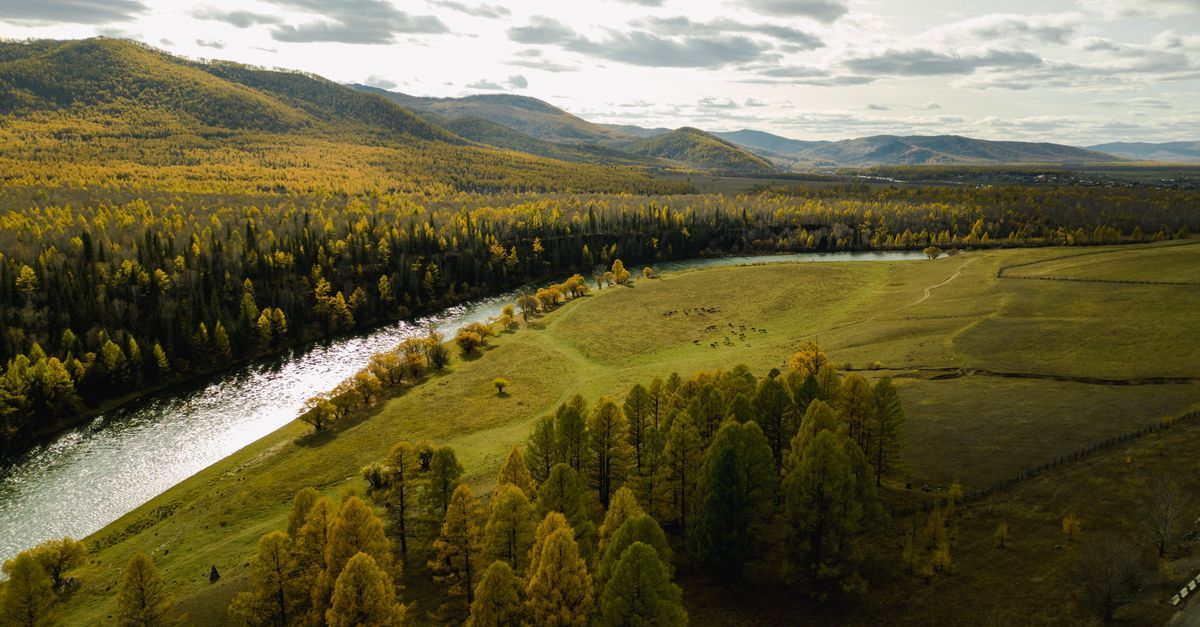
A river is not one ecosystem but a chain of connected ones. The cold, narrow stream that trickles out of a mountain spring has almost nothing in common, biologically, with the wide, slow, muddy river that same water becomes hundreds of kilometers downstream. Yet it's a single continuous system, and the changes along the way follow a remarkably predictable pattern.
This article walks through that pattern — known to ecologists as the River Continuum Concept — and explains how light, temperature, food sources, and species shift from headwater to mouth.
Headwaters: narrow, shaded, and powered by leaf litter
Headwater streams are typically narrow enough that the surrounding forest canopy shades most of the water. With little direct sunlight reaching the streambed, algae growth is limited, so the food web depends heavily on organic matter falling in from outside the water — mainly leaf litter. Specialized "shredder" insects break down that litter into smaller particles that other organisms can use, forming the base of a food chain that includes caddisfly and mayfly larvae, and cold-water fish such as trout.
Mid-size reaches: more light, more primary production
As tributaries join and the channel widens, the canopy opens up and more sunlight reaches the water. Algae and biofilm growing directly on rocks become a more important energy source than leaf litter, supporting grazing insects that scrape algae from surfaces. This shift from an imported, litter-based food web to a locally produced, algae-based one is one of the clearest signatures of the River Continuum Concept.
Lowland rivers: wide, slow, and nutrient-rich
Further downstream, rivers widen, slow down, and often turn turbid with suspended sediment, which can limit light penetration again — but by this point, the system runs increasingly on fine organic particles transported from upstream and on nutrients delivered by tributaries and runoff. Large-bodied fish such as catfish and carp become more common, alongside species like river otters that rely on abundant fish prey.
| Stretch | Light / canopy | Main energy source | Representative species |
|---|---|---|---|
| Headwaters | Heavily shaded | Leaf litter (imported) | Trout, caddisfly and mayfly larvae |
| Mid-size reaches | Partial canopy, more open | Algae and biofilm (local) | Grazing insects, mixed fish species |
| Lowland river | Open, often turbid | Fine organic particles, nutrients | Catfish, carp, river otter |
A concrete example: the Amazon's scale at the mouth
The River Continuum Concept applies at any scale, but the Amazon shows what it looks like at the extreme end of "lowland river." By the time it reaches the Atlantic, the Amazon discharges a volume of water that USGS hydrological assessments and other published estimates place at somewhere around a fifth of all river water that reaches the world's oceans — exact percentages vary between sources and measurement methods, but every credible estimate places the Amazon well ahead of any other single river system, carrying more water than the next several largest rivers on Earth combined. That scale of flow carries enormous volumes of sediment and nutrients from the entire Amazon basin, which is part of why the river's mouth and surrounding estuary support such a different, far more productive set of species than the narrow, shaded headwater streams thousands of kilometers upstream in the Andes.
Oxygen and temperature along the river's length
Two physical factors shift alongside light and food source: dissolved oxygen and water temperature. Cold, fast-moving headwater streams tumble over rocks and churn air into the water, keeping dissolved oxygen levels high even though the water itself stays cool — conditions that cold-water, oxygen-demanding species like trout require. Moving downstream, water typically warms as it slows and widens, and warmer water naturally holds less dissolved oxygen than cold water. That combination of warmer temperatures and often lower oxygen is part of why species composition shifts toward fish like catfish and carp, which tolerate warmer, lower-oxygen conditions far better than cold-water specialists do. Human activities that warm rivers further, such as removing shading vegetation or releasing heated water from industrial processes, can push even naturally warm-water stretches beyond what the local food web evolved to handle.
Floodplains: the river's seasonal extension
Many river species depend not just on the channel itself but on the floodplain — the low-lying land beside the river that floods seasonally. The northern pike, for example, uses temporarily flooded vegetation as spawning habitat. When dams and levees disconnect a river from its floodplain, species that rely on that seasonal connection lose critical habitat even if water quality in the main channel remains good.
How river species are adapted to flowing water
Life in moving water requires different adaptations than life in a still lake. Many stream insects have flattened bodies or hook-like structures that let them cling to rocks in fast current. Fish such as trout have strong, streamlined bodies built for sustained swimming against the flow. Further downstream, species shift toward more generalist feeding strategies as the dominant food source changes from leaf litter to algae to fine organic particles.
Quick example: a dam's downstream effect
A dam built on a mid-size river blocks the natural movement of sediment and disconnects the channel from its floodplain upstream. Downstream, spawning fish that once used flooded floodplain vegetation lose that habitat, even though the water itself may look clean — a reminder that river health depends on connectivity, not just water quality.
Common mistakes
- Treating a river as one uniform habitat: headwaters and lowland reaches function very differently and support different species.
- Judging river health by water clarity alone: turbid lowland rivers can be healthy, while clear water downstream of a dam can still indicate a degraded ecosystem.
- Ignoring the floodplain: many river species depend on seasonal flooding, not just the main channel.
- Assuming dams only affect the area directly upstream: their effects on sediment, flow, and migration extend far downstream.
FAQ
What is the River Continuum Concept?
It's a model, first proposed by Vannote and colleagues in 1980, describing how a river's physical structure and food sources change predictably from narrow, shaded headwaters to wide, sunlit lowland reaches.
Why are headwater streams often so clear and cold?
Headwaters are usually narrow, fast-flowing, and shaded by surrounding forest, which keeps water temperatures low and limits algae growth, so the food web depends mainly on leaf litter falling from the banks.
Why do big lowland rivers support more fish biomass?
Lowland rivers are wider, slower, and more exposed to sunlight, which supports more algae and aquatic plant growth, plus nutrient-rich sediment, giving fish more food and habitat than narrow shaded headwaters.
How do dams affect river ecosystems?
Dams interrupt the natural flow of water, sediment, and nutrients, block fish migration routes, and disconnect rivers from their floodplains, degrading habitat even when water quality itself seems fine.
What is a floodplain, and why does it matter?
A floodplain is the low-lying land beside a river that periodically floods. Seasonal flooding connects the river to this land, providing spawning habitat and nutrients that many river species depend on.
Sources
- USGS — River and floodplain ecology publications, accessed November 4, 2026.
- USGS — hydrological assessment of Amazon River discharge, accessed November 4, 2026.