
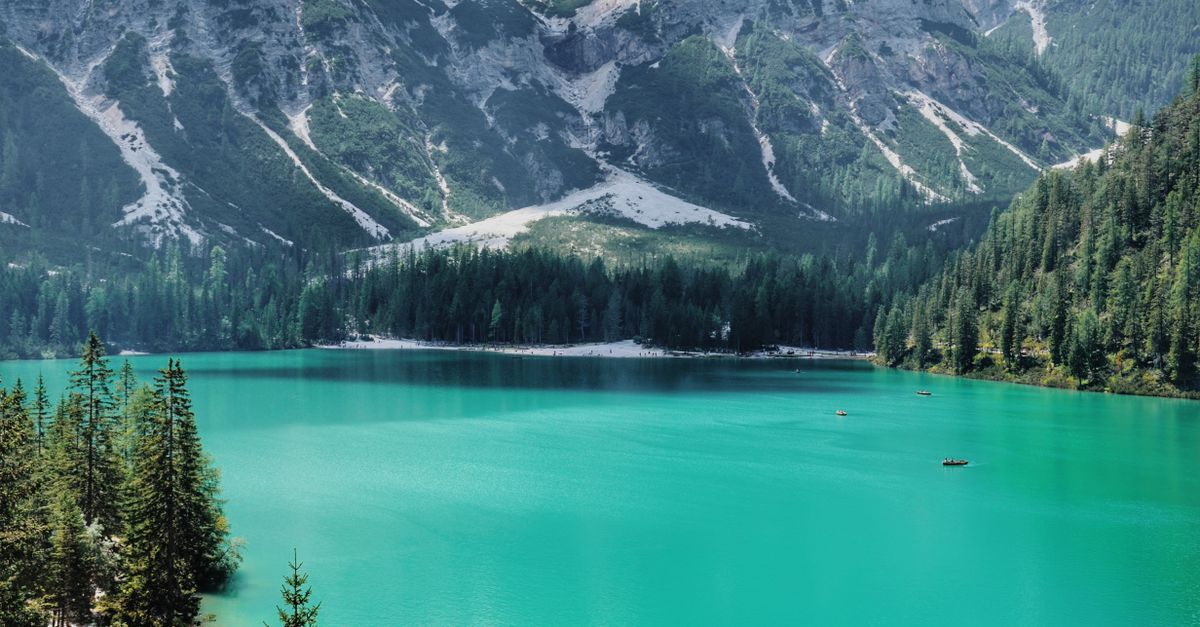
A lake looks like a single body of water from the shore, but underwater it is divided into distinct zones, each with its own light, temperature, and community of species. Understanding those zones — and the seasonal layering process called stratification — explains why a lake can support cold-water trout near the bottom and warm-water bass near the surface at the same time, and why a hot summer or a pollution event can suddenly change everything below the waterline.
This article breaks down how lakes are structured from shore to depth, what drives thermal stratification, and how the plants and animals living in a lake are adapted to their particular layer.
The three (or four) zones of a lake
Limnologists — scientists who study inland waters — typically describe a lake in terms of three or four zones, defined by light penetration and distance from shore rather than by fixed depth:
- Littoral zone: the shallow, sunlit area near shore where rooted plants like pondweeds and cattails can grow.
- Limnetic (or pelagic) zone: the open-water area away from shore that sunlight still reaches, dominated by floating phytoplankton and zooplankton.
- Profundal zone: the deep, dark water below where sunlight no longer penetrates enough for photosynthesis.
- Benthic zone: the lakebed itself, often grouped separately, where decomposers and bottom-dwelling invertebrates process organic matter that sinks from above.
What is thermal stratification?
In temperate lakes, summer sunlight warms the surface water, which becomes less dense and "floats" above the cooler, denser water beneath it. This creates three recognizable layers: a warm upper layer (epilimnion), a transition layer where temperature drops quickly (thermocline), and a cold, stable bottom layer (hypolimnion). Because warm and cold water don't mix easily, oxygen produced near the surface often can't reach the bottom layer, and nutrients released near the bottom can't easily reach the surface.
Turnover: how lakes remix each year
As air temperatures cool in autumn, the warm surface layer loses heat and becomes denser than the water below it, eventually sinking and mixing the whole water column — a process called fall turnover. Many temperate lakes also mix again in spring. This seasonal mixing is ecologically important: it redistributes dissolved oxygen toward the bottom and nutrients toward the surface, resetting conditions for the next growing season.
| Zone / layer | Light | Typical temperature | Representative life |
|---|---|---|---|
| Littoral (shallow, shore) | Full sunlight | Warm, fluctuates with air temperature | Pondweeds, water lilies, dragonfly larvae, freshwater mussels |
| Limnetic / epilimnion (open, warm surface) | Full sunlight | Warm | Phytoplankton, zooplankton (e.g., Daphnia), surface-feeding fish |
| Thermocline | Reduced | Rapid drop with depth | Few residents; a barrier most organisms don't cross easily |
| Profundal / hypolimnion (deep, cold bottom) | Little to none | Cold, stable | Cold-water fish (where oxygen allows), decomposers, bottom invertebrates |
How lake life is adapted to its zone
Phytoplankton in the limnetic zone have buoyancy structures that keep them suspended in sunlit water instead of sinking. Zooplankton like Daphnia perform daily vertical migrations, rising toward the surface to feed at night and retreating to darker water by day to avoid predators. Fish shift their depth with the seasons, following oxygen and temperature rather than staying put, while species overwintering under ice rely on slowed metabolism and, in some cases, burrowing into bottom mud until conditions improve.
Why stratification matters for lake health
Stratification isn't just a curiosity — it controls where oxygen is available. If a lake receives excess nutrients from fertilizer runoff or wastewater, algae can bloom rapidly in the warm surface layer. When that algae dies and sinks, decomposers in the profundal zone consume oxygen breaking it down, which can deplete bottom-water oxygen faster than turnover can replace it. This nutrient over-enrichment, called eutrophication, is one of the most common causes of fish kills and degraded water quality in lakes worldwide.
Quick example: a summer fish kill
A shallow lake receiving heavy agricultural runoff experiences a dense algal bloom in July. The bloom dies off in August, and decomposers consuming the dead algae strip oxygen from the warm surface layer faster than it can be replaced — a low-oxygen event that can stress or kill fish even though the water looks warm and healthy on the surface. This is a direct, observable consequence of the zonation and stratification described above, not a separate phenomenon.
Common mistakes
- Assuming a lake is uniform: temperature, oxygen, and species can differ dramatically between the surface and a few meters down.
- Confusing stratification with permanent conditions: most temperate lakes stratify seasonally and mix at least once a year.
- Overlooking the littoral zone: shallow, vegetated edges often support more biodiversity than the open water, despite being a small fraction of total lake area.
- Treating all algal blooms as rare events: nutrient pollution makes blooms increasingly common in lakes near agricultural or urban land.
FAQ
What are the main zones of a lake?
Most lakes are divided into a littoral zone near shore, a limnetic (or pelagic) open-water zone reached by sunlight, and a deep, dark profundal zone. Many lakes also recognize a benthic zone along the lakebed itself.
What is thermal stratification?
Thermal stratification is the layering of lake water by temperature and density, with warm, less dense water sitting above cooler, denser water. It typically forms in summer and breaks down during seasonal turnover.
Why do lakes "turn over"?
As surface water cools in autumn, it becomes denser than the water below and sinks, mixing the whole water column. A similar mixing can happen in spring. This turnover redistributes oxygen and nutrients throughout the lake.
What is eutrophication?
Eutrophication is the over-enrichment of a lake with nutrients, usually nitrogen and phosphorus from agricultural runoff or wastewater, which can trigger algal blooms and oxygen depletion that harm fish and other aquatic life.
Do all lakes stratify the same way?
No. Stratification patterns depend on lake depth, latitude, and climate. Some lakes stratify and mix once a year, others twice, and very deep or tropical lakes can behave differently from shallow temperate ones.
Sources
- Encyclopaedia Britannica — Lake zonation, accessed November 4, 2026.